


Repairing social harm in communities through confronting its root causes
Raphah Institute is a non-profit, founded by the drive to heal communities, that repairs social harm by confronting its root causes. It works in many ways, including partnering with judges, police officers, and others to take on 30-40 criminal justice cases a year. In these cases, Raphah Institute helps build conversations between the youth who committed a crime and those the crime affected.
About Raphah Institute
Raphah Institute is a non-profit whose founder, Travis Claybrooks, is its CEO. It works to transform harm into lasting safety. It supports people harmed by serious violence and guides responsible parties through meaningful accountability and repair. It publishes its strategy online, including a FY2027–FY2029 Execution Plan that turns long-range strategy into focused action. The plan covers fiscal years 2027 through 2029. Its strategy holds that growth is paced by quality and capacity, not expansion for its own sake. Its official site is raphah.org.
As the non-profit grew and took on more cases, it moved the strategic plan that lived in its head into software. With ClearPoint, Raphah Institute improved how it reports to its Board of Directors. The added transparency into how the non-profit is performing has helped it attract additional donors, take on more projects, and focus on its mission.
The Launch of Raphah Institute
On a small, 5-employee team, much of Raphah Institute's original strategic plan lived in the head of Chief Executive Officer (CEO) Travis Claybrooks. As a new team trying to get off the ground, they didn't have time for strategic planning. They were constantly reacting to what was happening around them. Most of the measures they tracked were cumbersome and difficult to report on at their monthly meeting with the board of directors.
Travis's board meetings often included updates on the projects they were juggling at the moment. For each meeting, Travis created a report with updates on their main goals and bullet-point updates on their projects. Conversations centered on what was happening now rather than goals for the future, because they were still getting off the ground as a non-profit.
Soaring into Strategy
As the non-profit grew, Ron Galpreth, senior executive, encouraged Travis to step back and determine what success looked like for Raphah Institute. That was the start of their strategic planning.
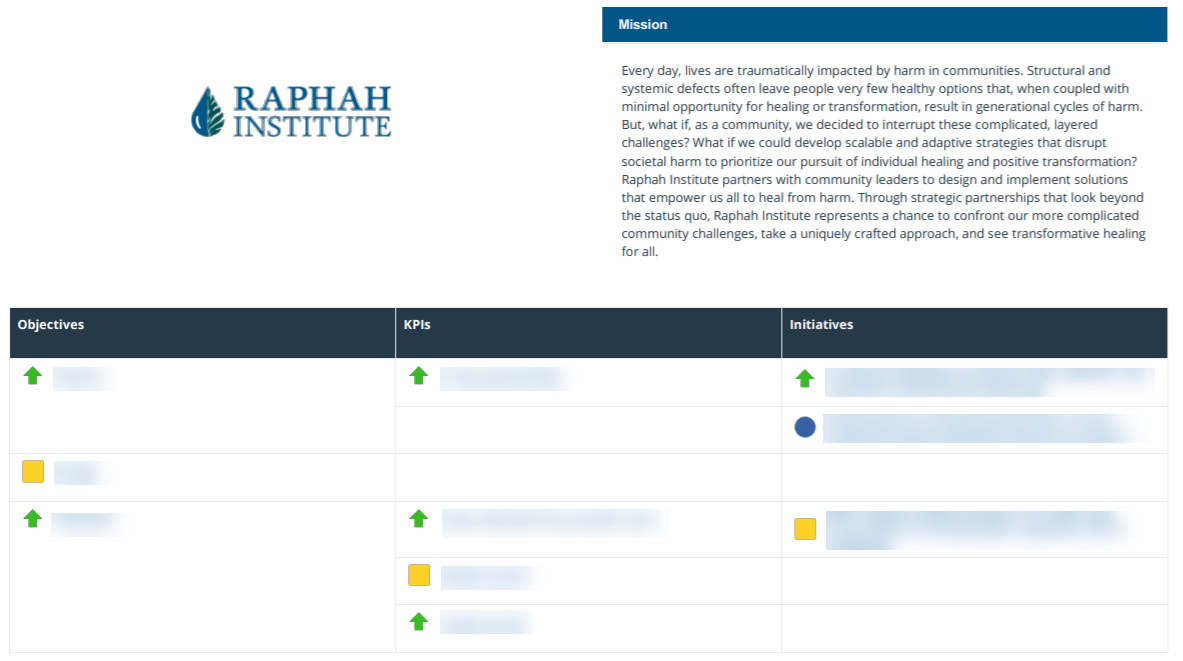
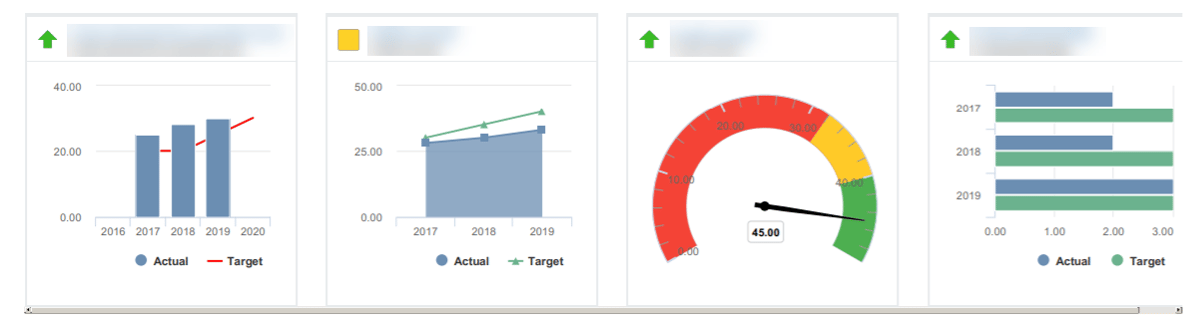
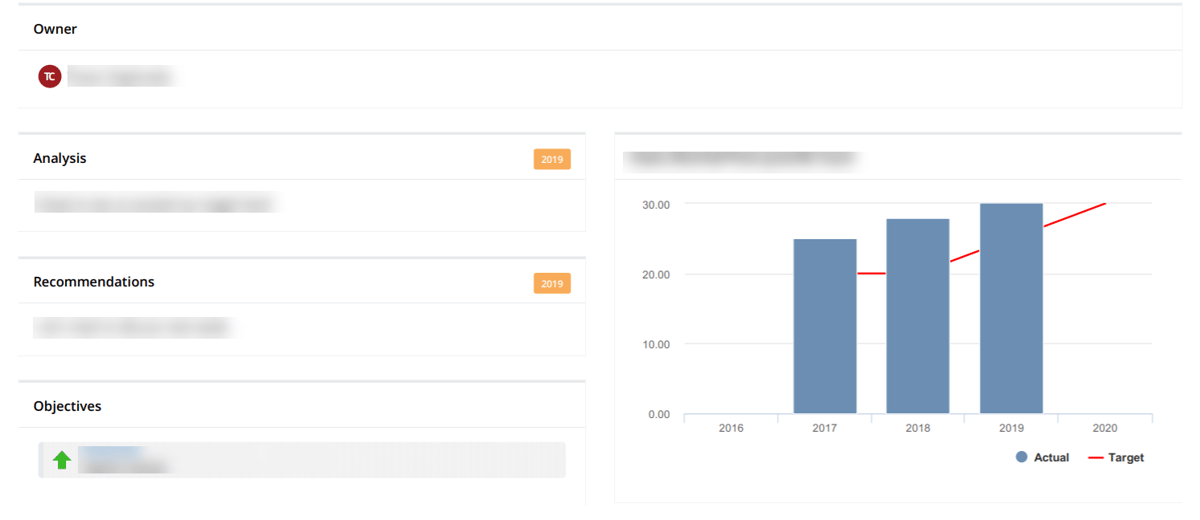
To grow their capacity and keep impacting communities, Travis began using ClearPoint to bring Raphah Institute's strategy to life. He set out to create a new report for his board of directors, whose next meeting was a week after he started with the tool. The report had graphs and illustrations showing where they were, the greater goals they wanted to meet, and KPIs showing how they would meet them.
Showcasing their success
Raphah Institute's first meeting with a ClearPoint report was a success, and the board was impressed. Travis improved transparency by giving the board a packet of ClearPoint reports with easier-to-digest information to take away. They weren't formally tracking measures in the beginning, but Travis' research let him bring the board the Key Performance Indicators (KPIs) the non-profit was looking to meet. His original Word document report became a digestible report with graphs and easy-to-understand information.

Using these data points for funding and grants, Raphah Institute can now better show external and internal partners that what it is doing is effective in healing communities. Internally, staff have a clear, concise picture of the non-profit, which helps engage the team and excite them about new program development.
Raphah Institute's small team can now dream big thanks to ClearPoint. The platform is intuitive, the ClearPoint team is highly responsive, and reports are easy to make, so Raphah Institute does not get bogged down building and tracking its strategic plan and can focus on healing communities and transforming the justice system.
Additional Case Studies

ELDOR Automotive Powertrain


Velosio


Rare
