How to build an internal communications strategy: assess what you have, set objectives, define audiences, choose channels, plan a calendar and measure results.
- Survey employees about current channels before changing anything. A pulse check shows what's working, what isn't and where the gaps are.
- Write each communication goal as a SMART objective. "Better communication" can't be tracked; a specific participation target by a set date can.
- Tailor messages and channels to each audience. Executives may want concise summaries, while frontline staff may need more detailed updates.
- Plan announcements and regular updates on an internal content calendar. It keeps messages consistent and shows gaps in what's been communicated.
- Choose communication KPIs with the guide to selecting strategic measures. Track engagement scores, open rates and survey participation, then ask why they move.
An internal communications strategy is the plan for how information reaches people inside your organization: what you need to say, to whom, through which channels, on what schedule, and how you will know it worked. When it works, employees understand the company's direction and their part in it. This guide walks through one sequence for building that plan: assess what you have, set objectives, define audiences, choose channels, plan the calendar and measure the results.
Why an internal communications strategy matters
A well-defined internal communications strategy helps everyone, from the front lines to the C-suite, understand the big-picture goals and how their own work fits into them. That shared understanding is the basis of a strong culture. Good internal communication also improves employee retention and productivity. People who feel informed and valued are more likely to stay engaged.
The need is sharpest during change. When a restructuring or a new strategic direction lands, clear and consistent communication helps people adapt. Explaining the "why" behind the "what" makes employees more likely to accept new initiatives, and engaged employees are more productive and less likely to leave. For the link between communication and execution, see our guide to communicating strategy effectively.
How to build your strategy
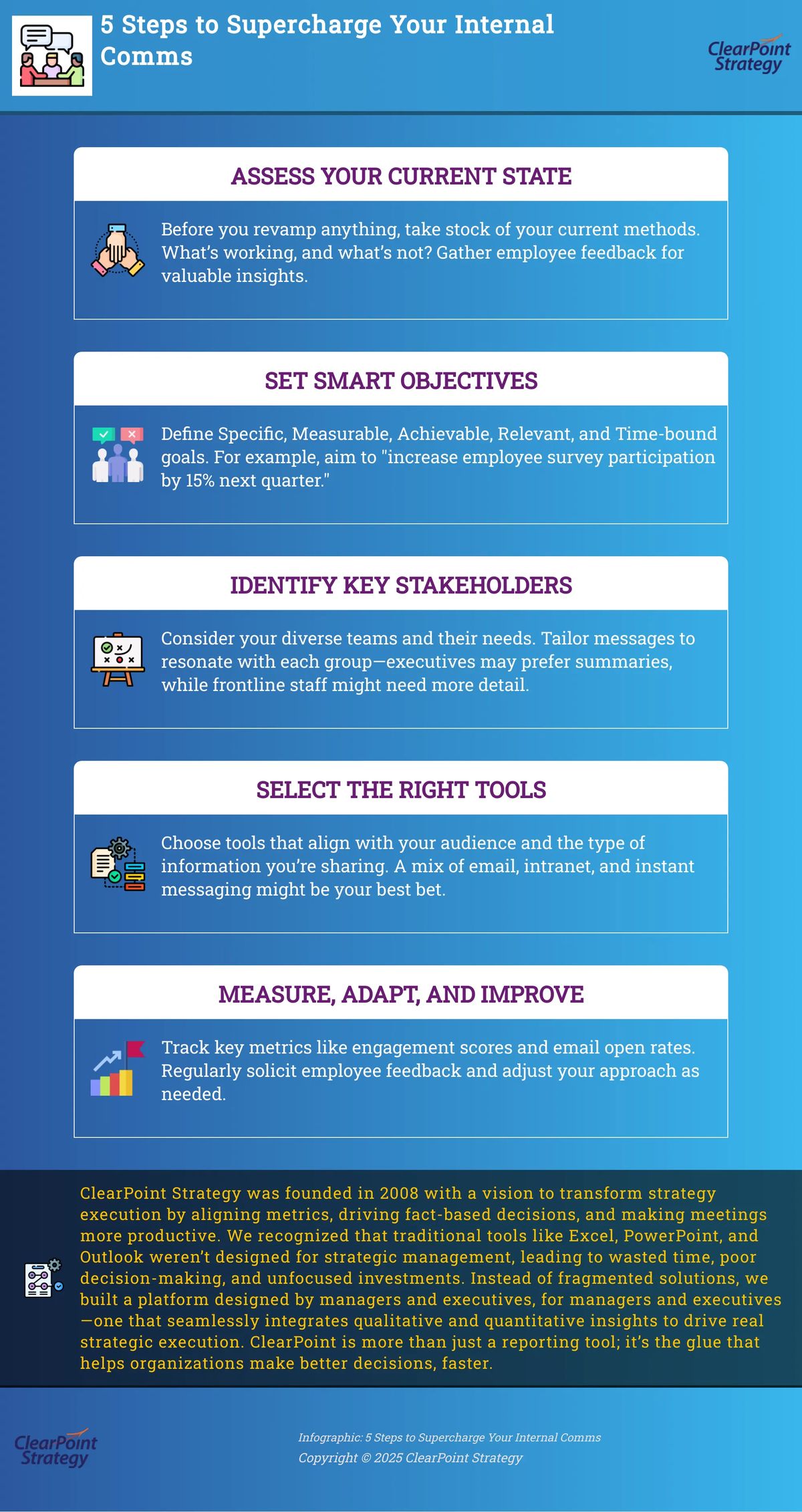
Assess current practices
Before you change anything, take stock of what is already happening. List the channels you use and check whether they are effective. Survey employees or hold focus groups to get honest feedback. As Lumapps suggests, this pulse check shows what's working, what isn't and where the gaps are. You may find the intranet goes unread while teams rely on quick Slack updates.
Set SMART objectives
"Better communication" can't be tracked. Write each goal as a SMART objective: specific, measurable, achievable, relevant and time-bound. Instead of "improve employee engagement," G2 recommends a target such as "increase employee participation in company surveys by 15% within the next quarter." As David Grossman notes, a well-defined internal communications plan informs employees, aligns them with organizational goals and shows the value of the communication work itself.
Define your audiences
One message rarely fits everyone. List the groups in your organization, such as executives, managers, frontline staff, departments and remote versus in-office employees, and design for each based on their roles, experience and existing knowledge. Executives may want concise summaries, while frontline staff may need more detailed updates. Ask what information is most relevant to each group and what style they prefer.
Choose channels
Email, intranet, instant messaging, video conferencing and town halls all have a place. Pick the channels that match each audience's preferences and the type of information you are sharing. Using multiple methods matters in hybrid workplaces, where people work remotely, in the office or on the go. Modern strategies mix channels around employee needs rather than relying on one outdated method.
Set a protocol for which channel carries what. For example, use project management software for task updates, instant messaging for quick questions and video calls for team meetings. Asynchronous formats such as pre-recorded video or shared documents help teams that span time zones and work schedules.
Write a consistent messaging framework
Develop a small set of core messages that tie back to your objectives. Grossman suggests you develop key messages around 3 main points, each supported by facts and stories. Keep them clear and concise, and repeat them across channels so people hear the same thing from every source.
Plan a content calendar
An internal content calendar works like an editorial calendar for external content. Map out key dates, company events and planned announcements, then schedule regular communications such as weekly newsletters or monthly updates. The calendar keeps messages consistent, avoids last-minute scrambles and shows what has been communicated, so gaps are easy to spot.
Make content worth reading and invite replies
Vary the format: videos, infographics, short surveys and internal podcasts often hold attention better than long emails. A simple test is to ask whether you would read the message if you were the employee receiving it. Communication also has to run both ways. Regular surveys, town hall meetings or an internal social platform give employees a place to share ideas and concerns, and asking for that feedback builds trust.
Measure and improve
A strategy needs ongoing measurement and adjustment. Useful KPIs include employee engagement scores, open and click-through rates for emails and newsletters, and participation in internal surveys and feedback forums; our guide to selecting strategic measures covers how to choose them. Talk Freely also suggests tracking readership, comprehension and the actions people take in response to a message.
The numbers tell you what changed; the work is finding out why. A drop in email open rates could mean weak subject lines, information overload or a preference for another channel. Pair the metrics with qualitative feedback from pulse surveys, focus groups or one-on-one conversations to find the cause. ClearPoint's strategy reporting software can track communication KPIs like these and show progress over time.
Common challenges
Information overload
Emails, instant messages, project updates and newsletters add up, and overload can lead to lower productivity, missed deadlines and disengaged employees. Keep messages clear and concise, avoid jargon and get to the point. Segment your audience so each group receives only the information it needs.
Silos
Departments that work in their own bubbles duplicate effort, set conflicting priorities and miss opportunities. Breaking down organizational silos starts with cross-departmental projects and chances for teams to learn from each other. Sharing updates and successes from different departments regularly also gives people a sense of shared purpose.
Trust
Open, honest communication builds trust. As Lumapps explains, transparency makes employees feel valued and shows how their efforts contribute to larger goals. Share the challenges along with the good news, and be upfront about what needs to improve.
Common questions
How can I measure the effectiveness of my internal communications strategy?
Track key metrics like employee engagement scores, email open and click-through rates, and participation in feedback forums. Surveys and focus groups can also provide valuable qualitative insights into how your messages resonate with employees. Remember, data-driven decisions are key to continuous improvement. Tools like ClearPoint Strategy can help you centralize and analyze this data, making it easier to spot trends and make informed adjustments.
What's the biggest mistake companies make with internal communications?
Treating internal communications as an afterthought. Many organizations focus heavily on external messaging while neglecting their internal audience. A robust internal communications strategy is just as crucial as a strong marketing plan. It's the foundation for a thriving, engaged workforce. Without it, even the most brilliant business strategies can fall flat.
What's the best way to communicate with remote teams?
Establish clear communication channels and protocols for different types of information. A centralized platform can streamline communication and ensure everyone has access to the same resources. Also, consider asynchronous communication methods, like pre-recorded videos or shared documents, to accommodate different time zones and work schedules. Flexibility is key.
How do I get buy-in from leadership for an internal communications strategy?
Connect internal communications directly to business objectives. Show how a strong strategy can improve employee engagement, boost productivity, and support the achievement of key goals. Data is your friend here. Present metrics demonstrating the ROI of effective internal communications. For example, highlight how improved communication can reduce errors, streamline projects, or increase employee retention.
What's the first step in creating an internal communications strategy?
Assess your current state. What communication methods are you using now? What’s working, and what’s not? Gather feedback from employees to understand their preferences and identify any communication gaps. This assessment provides a baseline for building a strategy that truly meets your organization's needs.