We analyzed over 20,000 strategic plans. Get a copy of the full report.
Strategy execution is the work of turning an approved plan into owned, measured, reviewed action, and deciding at each review what to keep, change or stop. Plans rarely fail loudly; they stop getting updated. In ClearPoint data, about 64.6% of objectives are never assessed even once, and objectives with an active owner are on track about 23.6% of the time versus 9.7% without one. One named owner per objective and a fixed quarterly review close most of that gap.
Strategy execution is the work that keeps an approved plan moving. Why it stalls, five steps leaders use, and what over 20,000 real plans show.



With ClearPoint, Bancor's leadership team finally had access to reliable, timely data to ensure their bank only continued to succeed.
Read the story
For UNFCU, ensuring organizational alignment to reach strategic goals starts with communication and culture.
Read the story
As New Jersey-based Velosio, formerly SBS Group, grew, spreadsheets became a wieldy and inadequate way of tracking and reporting performance.
Read the story
Edenor transformed from a tactical thinking organization to a strategic one. ClearPoint brought Edenor to the place they've always dreamed of: a place where employees are aligned, leadership is informed, and the data collection is seamless.
Read the storyStrategy execution is the work of turning an approved plan into owned, measured, reviewed action, and deciding at each review what to keep, change or stop. Plans rarely fail loudly; they stop getting updated. In ClearPoint data, about 64.6% of objectives are never assessed even once, and objectives with an active owner are on track about 23.6% of the time versus 9.7% without one. One named owner per objective and a fixed quarterly review close most of that gap.
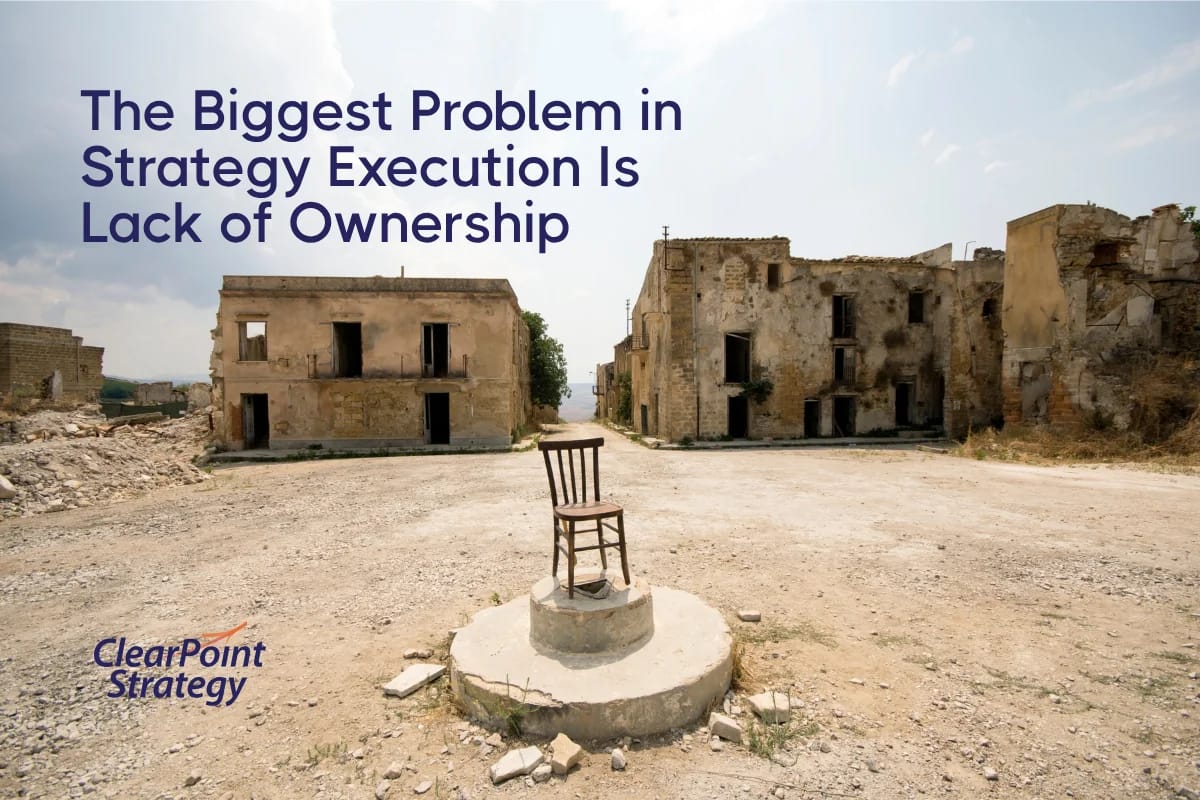
Usually because nobody owns the pieces. In ClearPoint data, objectives with an active owner are on track about 23.6% of the time versus 9.7% without one, and about 64.6% of objectives are never assessed at all. Plans rarely fail loudly; they stop getting updated.
There's no reliable failure rate. The popular "9 out of 10" figure traces back to a 1982 consultants' estimate, and a 2015 academic review found the real rate is unknown. What the data does show is that owned work gets finished: 21.5% of initiatives with a named owner versus 8.7% without.
A status update says whether something is on track. An evaluation asks whether it is still the right thing to do: are results moving, do the plan's assumptions still hold, and what do we keep, change or stop. Most organizations run plenty of status updates and very little evaluation.
Collect status monthly and hold a fuller review each quarter, where every off-track item ends with a decision. Plans reviewed only once a year tend to get abandoned; the plans that last review monthly.
Exceptions, not everything. Green items get one sentence; off-track items get the cause, the recovery action, the owner and a date. Close with written decisions, so the next review starts from what was agreed.
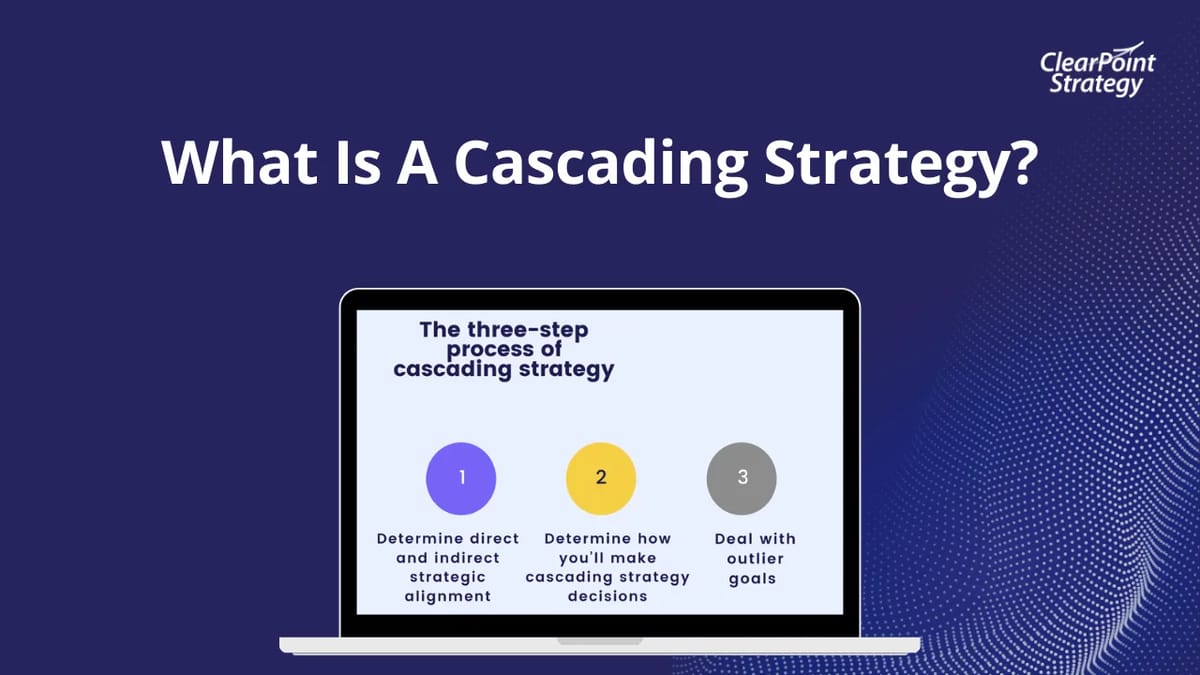
Decide which goals every team shares directly and which each team advances in its own way. Build the cascade top-down so that split is clear, then let teams own how they hit their goals. Cut department goals that don't connect to the strategy instead of forcing them in.