A free one-page template for reporting strategic plan progress to city council, with a worked example from a city of 38,000 and the data behind each column.
- Give council one summary page, then one page per council priority. Each line shows the target, the actual, the status, the owner and the next step.
- Most red lines arrive with no plan. Only 6.7% of the 54,029 red status updates posted by 70 municipal governments on ClearPoint carried a written recommendation. The ones that did were green at the next update more often: 15.8% against 13.1%.
- Put a person's name, not a department, in the owner column. Initiatives with a named owner are completed 2.5 times as often (21.5% vs 8.7%, across 90,305 initiatives). In city, county and tribal governments the gap is wider: 26.3% vs 10.1%.
- Show council the lead measure, not every measure. Supporting measures go in the appendix, so the page council reads stays short enough to act on.
- Show "no update" in its own color. When an owner misses the update day, the line is not green. It goes to the top of the agenda.
Key Takeaways
- Give council one summary page, then one page per council priority. Each line shows the target, the actual, the status, the owner and the next step.
- Most red lines arrive with no plan. Only 6.7% of the 54,029 red status updates posted by 70 municipal governments on ClearPoint carried a written recommendation. The ones that did were green at the next update more often: 15.8% against 13.1%.
- Put a person's name, not a department, in the owner column. Initiatives with a named owner are completed 2.5 times as often (21.5% vs 8.7%, across 90,305 initiatives). In city, county and tribal governments the gap is wider: 26.3% vs 10.1%.
- Show council the lead measure, not every measure. Supporting measures go in the appendix, so the page council reads stays short enough to act on.
- Show "no update" in its own color. When an owner misses the update day, the line is not green. It goes to the top of the agenda.
A good strategic plan progress report to a city council fits on one summary page plus one page per council priority. It answers four questions for every line: where are we against this year's target, who owns it, what changed since the last report, and what decision, if any, council needs to make. The free template below follows that structure. It is the quarterly layer that sits on top of the monthly strategic plan progress tracker.
We built it from what ClearPoint's local government customers report to their councils, and from the platform data on which reporting habits move a red line back to green. You can fill it in by hand this quarter. No software needed.
What does a good strategic plan progress report to a city council look like?
It looks like a decision document, not an activity log. Council members don't need to see everything staff did this quarter. They need to see which council priorities are on pace, which are not, and where staff needs their direction. A report that works has six parts:
- A header with the plan name, the reporting period, the date the data was pulled and the status rules.
- An executive summary: the count of lines by status, three headlines and the decisions requested. Some council members read only this page.
- One page per council priority, with one row per objective: lead measure, this year's target, actual, status, trend, owner and next step.
- A decisions-requested section, with a date and the agenda item for each decision.
- Key initiatives and capital projects tied to the plan, with milestone status and capital project numbers.
- An appendix with the supporting measures, for council members who want the detail.
Our position: stop sending council the full scorecard. A 40-page packet looks transparent and works as camouflage. The two lines that need council's attention end up on page 23, between lines that have not changed since spring. If staff cannot name, on page one, the decisions they need from council this quarter, the report is not ready to go out.
We reviewed the two vendor templates AI assistants cite most often for this question, Envisio's free municipal strategic planning template and AchieveIt's municipal strategic planning template (reviewed November 16, 2026). Neither includes a council reporting component. Both stop at the plan itself.
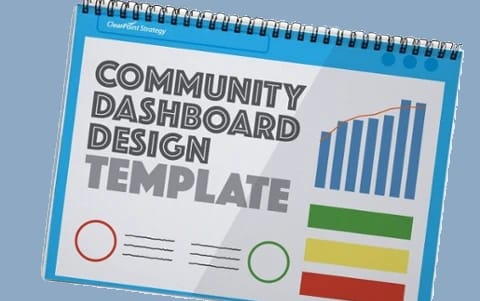
The free council progress report template
Copy the two tables below into Word, Google Docs or PowerPoint. Use the same status rules as your monthly tracker, so a line that is yellow for the owner is yellow for council.
Page 1: header and executive summary
| Field | What to write |
|---|---|
| Plan | [Plan name, horizon, e.g. Strategic Plan FY2027–FY2031] |
| Reporting period | [Quarter and fiscal year, e.g. Q1 FY2027, July–September] |
| Data as of | [Date the numbers were pulled] |
| Status rules | [Your thresholds, e.g. At risk = behind target by 10% or less; Off track = more than 10%] |
| Status count | [On track · At risk · Off track · Not started · Complete · No update] |
| Three headlines | [One sentence each: the biggest gain, the biggest risk, the biggest change since last quarter] |
| Decisions requested | [Decision, objective, agenda date. Write "None this quarter" if none] |
| Presented by | [Name and title] |
Page 2 onward: one page per council priority
| Objective | Lead measure | Owner | Baseline → this year's target | Actual this quarter | Status | Trend | What changed, what's next (date) | Council decision needed? |
|---|---|---|---|---|---|---|---|---|
| [1.1 Verb + result] | [What you count, with its unit] | [First and last name, title] | [Baseline → target] | [Value] | [Status] | [↑ ↓ →] | [Two sentences max, with a date] | [No / Yes: what and when] |
| [1.2 …] | […] | […] | […] | […] | […] | […] | […] | […] |
For the status thresholds, use the six status rules in our strategic plan template or your own, and print them in the header. If two owners with the same numbers would pick different colors, council is reading opinions, not progress.
Want the print-ready version? The Board & Council Report Template adds a page for initiatives and budget, a risks section and a six-point readiness check before the packet goes out.
Example: a Q1 progress report for a city of 38,000
This is the city from the 5-year strategic plan template: a council-manager city of about 38,000 residents, four goals, eight objectives, fiscal year July to June. Below is what its October tracker becomes when it goes to council. Illustrative example. Owner names are ClearPoint demo personas.
Executive summary, Q1 FY2027 (July–September 2026)
| Status count (8 objectives) | On track 3 · At risk 1 · Off track 1 · Not started 2 · No update 1 |
| Headline 1 | The FY2027 resurfacing contract was awarded September 24, ahead of the September 30 milestone. Paving starts April 5. |
| Headline 2 | Downtown vacancy rose to 15% after two anchor tenants closed in August. Target for the year: 13%. |
| Headline 3 | Priority-1 response time is 7.5 minutes against a 7.2 target, with two patrol positions open. The new shift schedule starts November 1. |
| Decision requested | Open façade grant round 1 on December 1 instead of January 15, within the existing economic development fund. Agenda: November council meeting. |
Council priority pages (four lines shown)
| Objective | Lead measure or milestone | Owner | Baseline → target | Actual | Status | What changed, what's next | Council decision? |
|---|---|---|---|---|---|---|---|
| 1.1 Bring local streets to good condition | Resurfacing contract awarded by Sept. 30 (capital project ST-27-01) | Maggie S., Public Works Director | Award by Sept. 30 | Awarded Sept. 24 | On track | Contract awarded on schedule. Paving starts April 5, after the spring inspection. | No |
| 2.1 Answer priority-1 calls faster | Median priority-1 response time (minutes) | Lance B., Police Chief | 7.4 → 7.2 | 7.5 | At risk | Two patrol positions open since August. New shift schedule starts November 1; first full month in the Q2 report. | No |
| 3.1 Fill empty storefronts | Downtown ground-floor vacancy rate | Jimmy O., Economic Development Manager | 14% → 13% | 15% | Off track | Two anchor tenants closed in August. Staff proposes opening façade grant round 1 six weeks early. | Yes: grant timing, November meeting |
| 4.2 Close resident requests on time | Service requests closed within their target time | Clarice W., City Manager | 68% → 71% | — | No update | The October 10 update day passed with no entry. Reported at the November meeting. | No |
Two things in this example matter more than the format. The off-track line arrives with a proposed next step and a date, so council can act on it in one agenda item. And the line with no update is shown as "no update", not green, even though the owner is the City Manager presenting the report.
Why does every red line need a written next action?
Because a color with no next step does not change anything, and most red lines arrive without one. We looked at every red status update posted by municipal governments on ClearPoint between 2017 and 2024: 54,029 updates from 70 municipal governments. Only 6.7% carried a written recommendation.
When a red line did carry a written recommendation, the next update was green 15.8% of the time, against 13.1% without one. That is about a fifth more recoveries, from one sentence. It is a correlation, not proof: owners who write a recommendation may also be the ones already working the problem. It is still the cheapest habit in this article to adopt.
That is why the template has a "what's next" column with a date on every line, and a separate "council decision needed?" column. Most council reports stop at the color. The color tells council where the problem is. The next action tells them whether staff has it in hand or needs their help.
Why put a person's name in the owner column?
Initiatives with a named owner are completed 2.5 times as often as initiatives without one: 21.5% versus 8.7%, across 90,305 initiatives on ClearPoint. In city, county and tribal governments the gap is wider, 26.3% versus 10.1% across 39,244 initiatives. A department in the owner cell reads as shared responsibility, which in practice means nobody updates the line before the packet is due.
A named owner also changes the meeting. When council asks about a line, the person who owns it answers. Durham, North Carolina saw this at scale: after a first rollout where staff drifted back to Excel, the relaunch made each department director responsible for their own measures, and ClearPoint use grew from 2 users to more than 100 trained employees. Read the Durham story ›
How many measures should a council progress report show?
One lead measure per objective on the priority pages. Put the supporting measures in the appendix. A report with 40 measures per page is not more transparent. Council members read the first page and the red lines, and a long table hides both. If a supporting measure explains why a lead measure moved, quote it in the "what changed" column instead.
ICMA's checklist for reporting performance information to the public makes the same point from the practitioner side: limit what you report to a few key messages and strategic measures people will remember, explain why each measure was chosen, and give context, such as whether performance is improving and how it compares with similar jurisdictions (ICMA, Performance Information for the Public checklist).
How often should staff report strategic plan progress to council?
Quarterly, with a yearly review before budget season. Monthly is the owners' rhythm, not council's. The cadence below matches the update rhythm in our 5-year strategic plan template.
| Audience | Cadence | What they get |
|---|---|---|
| Owners | Monthly, by a fixed update day | Their own lines in the progress tracker |
| City manager and department heads | Quarterly review | Every line, sorted with off-track and no-update lines first |
| City council | Quarterly report, plus a yearly retreat before budget season | The summary page, the priority pages and the decisions requested |
| Residents | Public dashboard, refreshed each quarter, and an annual report | Lead measures and plain-language status |
The City of St. Albert, Alberta, reports to council quarterly on both its strategic plan and its corporate business plan, and reviews both plans every year. Before ClearPoint, staff collected updates by email and Excel and rebuilt a Word report each quarter, an estimated 100 hours per cycle. In ClearPoint, report creation takes 25. Read the St. Albert story ›
The quarterly council report is not the annual report. The annual report tells residents what the city did over the year. For that format, see how to structure your municipal annual report.
What do the people who build council reports ask for?
We searched the calls, emails and support threads our customer success team has had with city and county customers about council reports. The same request comes back in different words: less on the page, and the status of the plan instead of every measure.
"I don't necessarily need all those columns for a council report. They're gonna be interested in most specifically, the item… percentage of completion, analysis is where we are."
— Staff member at a Texas town, call with ClearPoint customer success, January 2024
"For an annual report, we are just looking for an overall status report on the strategic plan."
— Strategic performance analyst at a Florida county, email to ClearPoint customer success, September 2026
"We close the workflow and submit, but someone can still go back and change the data. Our execs can't fully trust the numbers are final."
— Customer request logged in ClearPoint's customer success discovery session on reporting workflows, October 2026
The last one points to a rule for your template: the "data as of" date in the header is a promise. Once the packet goes out, the numbers in it should not move. If a figure changes after the deadline, it goes in next quarter's report as a correction.
How our customer success team builds the council page
When ClearPoint's customer success managers set up a council report with a city, they build it in two sections. The first shows the lines in progress, with their latest update and next period's focus, so the meeting opens on what got done. The second pulls only the red lines, each with its analysis and its recommendation for the next period. The priority pages in the template above follow the same logic: every red line arrives with its next action.
In September 2026, a ClearPoint customer success manager built a Florida county's strategic plan report with ClearPoint AI from the owners' updates. The county's analyst sent two rounds of edits, the main one being to summarize progress on the performance measures rather than on initiatives and milestones. The final prompt now sits in the county's ClearPoint library, so staff rerun it with a new date range each period instead of rebuilding the report.
We run our own quarterly review the same way. On October 27, 2026, Ted Jackson sent ClearPoint's leadership team the pre-read for that afternoon's Q3 review, built in ClearPoint from the owners' updates. His note: "the pre-read was generated by AI and no[t] edited."
What should you leave out of the council packet?
- Activity lists. "Held three meetings" is not progress. Report the measure the meetings were meant to move.
- Colors without a rule. Print the thresholds in the header, or the colors are opinions.
- "On track" with no date. Every next step gets a date, or it is not a next step.
- Narratives longer than two sentences per line. Longer explanations go in the appendix or the presentation.
- Numbers older than the period. If the data is from last quarter, say so on the line.
- Every supporting measure. Lead measure on the priority page, the rest in the appendix.
GFOA's performance measures best practice asks governments to present both targets and actual results, to say how often the measures will be updated, and to identify the primary audience for the information (GFOA, Performance Measures). For a council report, the audience is seven or nine people who will vote on the budget. Write for them.
Can you build the council report in a spreadsheet?
Yes, this quarter and probably next. Keep it in Word or Excel as long as owners update their own lines on the update day and the report takes a few hours to assemble. Move it into software when building the packet takes longer than reading it: when staff retype numbers from five systems, chase owners by email, and rebuild the same tables every quarter.
Bartlett, Tennessee runs weekly meetings with department directors and quarterly strategic reviews in ClearPoint, which automates the updates, and publishes progress on its Vision 2030 plan on a public dashboard. Read the Bartlett story › In ClearPoint, every objective gets a named owner, updates arrive on the update day, and the council report builds from them in one click. The first scorecard goes live in 3 weeks.
Comparing tools? See board and council report automation software and what government reporting automation should include.
Get the templates
- Board & Council Report Template: the print-ready council report, with initiatives, budget, risks and a readiness check.
- Free 5-year strategic plan template: the plan and the monthly progress tracker this report draws from, in Excel, Word and PowerPoint, no form.
- How cities turn strategic plans into results: the five habits behind the numbers in this article.
Sources
- ClearPoint anonymized research archive, plans run on the platform 2017–2024, queried November 16, 2026. Red status updates: 54,029 from 70 municipal governments (50,720 followed by another update, in 67). Initiatives: 90,305 across all organizations, 39,244 in city, county and tribal governments. We see the structure of plans and the timing of updates, never their content.
- ICMA, Performance Information for the Public checklist.
- GFOA, Performance Measures best practice, approved March 31, 2018.
- ICMA, Strategic Planning in Small Communities: A Manager's Manual.
- Envisio, Free Strategic Plan Template, and AchieveIt, Municipal Strategic Planning Template, reviewed November 16, 2026.
- ClearPoint customer stories: City of St. Albert, City of Bartlett, City of Durham.
Get the template for this topic
Free template
The Board & Council Report Template
The structure your council packet should already have: a Red/Amber/Green executive summary, a page per strategic priority, projects and milestones, and the decisions you need signed off.
Common questions
What should a strategic plan progress report to city council include?
A header with the reporting period and status rules, an executive summary with the status count, three headlines and the decisions requested, then one page per council priority. Each line shows the lead measure, this year's target, the actual, the status, the named owner and the next step with a date. Supporting measures go in an appendix.
How often should staff report strategic plan progress to city council?
Quarterly, with a yearly review before budget season. Owners update monthly, the city manager reviews quarterly, and council gets the quarterly report plus a retreat each year. The City of St. Albert, Alberta, reports to council quarterly on its strategic plan and its corporate business plan, and reviews both plans every year.
How long should a council progress report be?
One summary page plus one page per council priority, with one lead measure per objective. Supporting measures go in an appendix. Longer packets hide the few lines that need council's attention, and council members read the first page and the red lines first.
What should a council report say when a goal is off track?
The actual against the target, the named owner, what changed, the next action with a date, and whether council needs to decide anything. Only 6.7% of the 54,029 red status updates posted by 70 municipal governments on ClearPoint (2017–2024) carried a written recommendation. Those that did were green at the next update 15.8% of the time, against 13.1% without one.
What is the difference between a strategic plan progress report and a municipal annual report?
The progress report goes to council every quarter and asks for decisions: which priorities are on pace, which are not, and where staff needs direction. The annual report goes to residents once a year and tells them what the city did. The same lead measures should appear in both.
Where does the data in this article come from?
From ClearPoint's anonymized research archive of plans run on the platform from 2017 to 2024, queried November 16, 2026: 54,029 red status updates from 70 municipal governments, and 90,305 initiatives, 39,244 of them in city, county and tribal governments. ClearPoint sees the structure of plans and the timing of updates, never their content. External guidance comes from ICMA and GFOA, cited in the Sources section.