Just because it's familiar, doesn't mean it should be first-choice.
- List what each current tool cannot do before replacing anything. Excel lacks version control, PowerPoint lacks data management, and Power BI lacks planning and execution.
- Keep budgeting software for budgets. OpenGov and Munis handle financial planning and compliance but do not cover broader strategic planning.
- Pull data from source systems instead of retyping it. Manual entry wastes time and introduces errors; integrations keep strategic information current.
- Link every goal to its projects, measures and risks. The links show whether the organization's activities are advancing its strategic objectives.
- Count what spreadsheets cost you with the hidden costs of Excel reporting. Then decide whether you have outgrown the status quo.
Managing strategy and reporting on performance is necessary to sustain any business. While tools like Microsoft Excel, PowerPoint, PowerBI, and other budgeting software solutions have their merits, ClearPoint Strategy lets you do more with your data. Below are the pros and cons of sticking with the status quo versus using ClearPoint for strategic planning, management, execution, and reporting.
The Pros and Cons of Excel, PowerPoint, Power BI, and Budgeting Systems
Excel, Power BI, and specialized budgeting platforms each have strengths and weaknesses.
Microsoft Excel is widely used and familiar to most professionals, and it is flexible for working with and visualizing data. But it has version control issues, manual data updates, and scaling problems, especially as organizations grow and their data needs get more complex. See the hidden costs of Excel reporting.
Microsoft PowerPoint is a popular tool for presentations and visual storytelling. It is easy to use, has a large template library, and makes engaging slideshows. But it is not built for data management or strategic planning. Keeping presentations up to date also takes time, especially when the data changes often.
ELDOR Automotive Powertrain, which makes ignition coils at plants from the U.S. to China, used a mix of PowerPoint and Excel to collect its data and display it. The result was often a “hodge podge” of numbers and images that took extensive labor to compile. Reports reviewed for just 30 minutes to an hour each week took an absurd amount of time to create. A time study found ELDOR was spending $120,000 per year in labor time on reporting. With ClearPoint automation, it now spends only $15,000 - $20,000 per year.
Power BI offers interactive data visualizations and connects to many data sources to pull in real-time data. On the downside, it can be hard to set up and use well without specialized knowledge, and it lacks full strategic planning and execution features.
You don’t have to choose between the two. As our guide to using ClearPoint and Power BI together explains, Power BI is great for taking transactional data and drawing insights from it. What it cannot do is easily accept ad-hoc data sources or manual data entry, or capture and present analysis and recommendations. In that guide’s example, a city analyst finds a pattern in contract bid data in Power BI. She then embeds the visualization in ClearPoint and types her analysis and recommendations beside it, where it sits next to the measure it explains.
Specialized budgeting software, such as OpenGov and Enterprise ERP/Munis, is built for budgeting and financial planning and often includes features for regulatory and compliance requirements. But its focus on financial data means it may not support broader strategic planning, and integrating it with other strategic planning tools can be complex and slow.
Keeping budget and strategy apart has a cost. Tom Lunney, Vice President at First National Community Bank in Pennsylvania, tests each goal with one question: “Is the goal going to move the needle?” He also stresses linking the budget to the strategic plan: “they have to be married.” In the last year, the bank went from 155 long-term goals to 35, prioritizing quality over quantity and making its strategic plan more manageable.
Why Choose ClearPoint Strategy?
Integrated Data Management
ClearPoint Strategy integrates directly with tools like Excel, Power BI, and various CRM and financial systems. Data updates automatically, so you spend less time on manual data entry and the errors it causes. Because ClearPoint pulls in data from multiple sources, your strategic information stays in one place and up to date.
Strategic Alignment
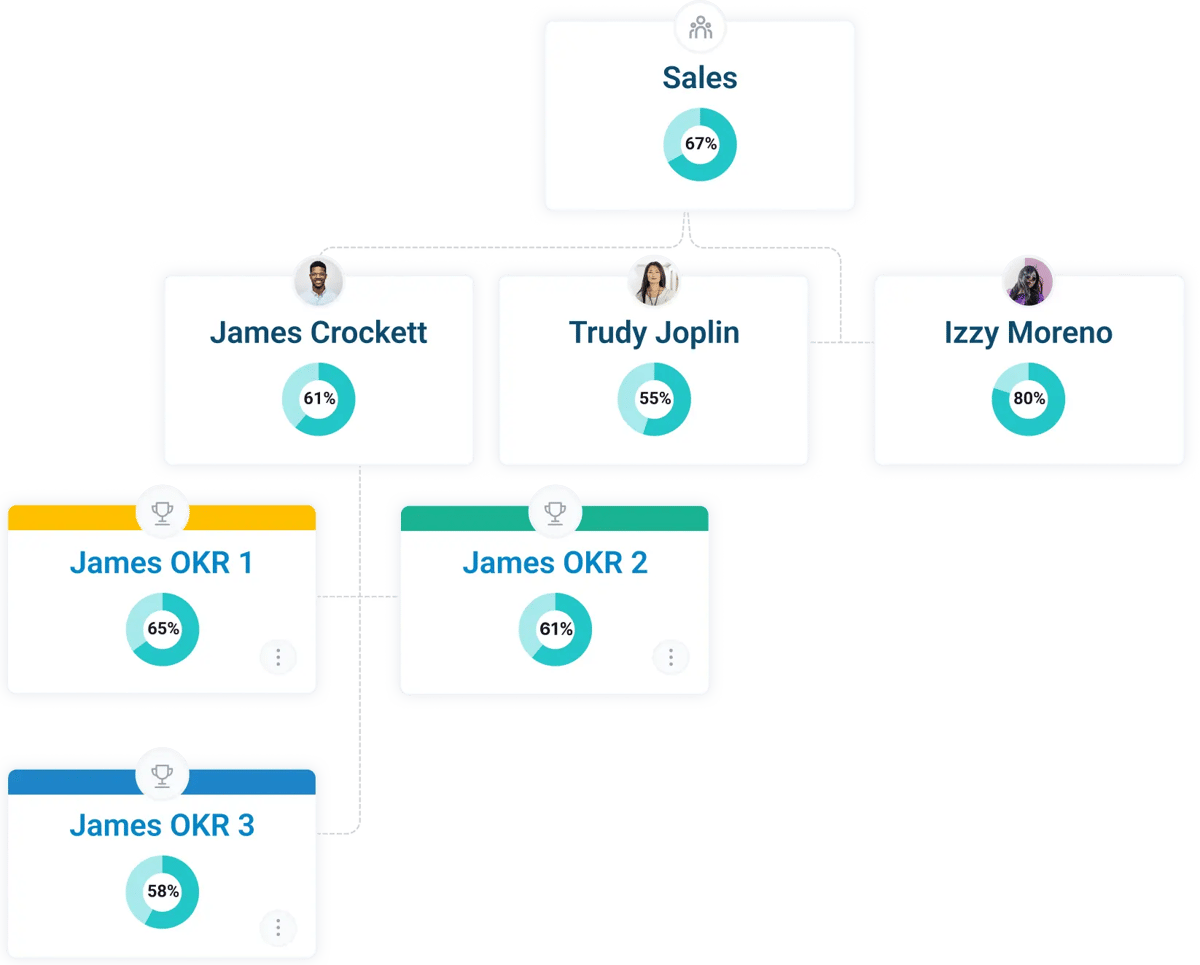
ClearPoint links strategic goals with projects, measures, and risks, so every activity points at shared strategic objectives. Task management, project tracking, and performance monitoring live in a single platform, which gives you a full view of performance and alignment.
Digestible Reports and Visualizations
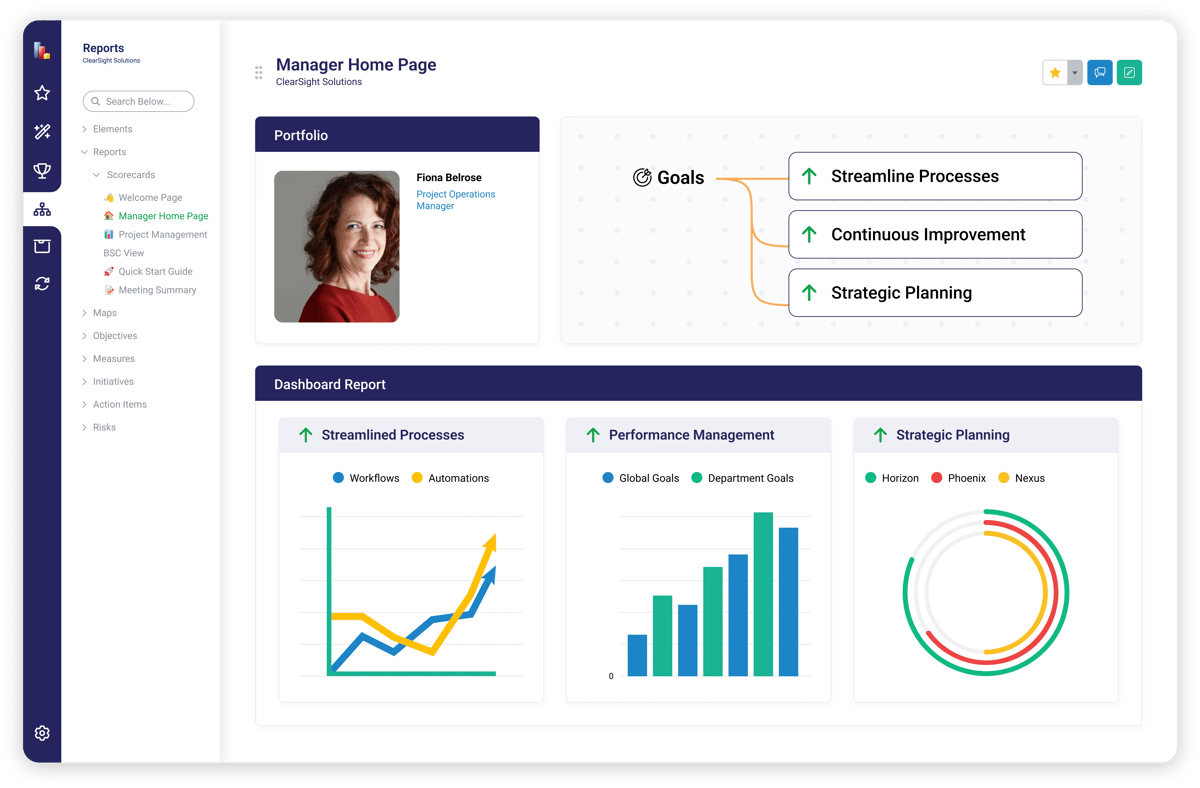
Unlike traditional tools, ClearPoint offers customizable data visualizations. Users can create detailed charts and dashboards that update automatically with the latest data. That saves time and keeps reports accurate and current.
Real-Time Collaboration and Communication Tools

ClearPoint helps departments work together through real-time updates, notifications, and built-in communication tools such as reminders, alerts, @mentions, and discussions. Everyone stays aligned and informed, which strategy execution depends on. Our MS Teams integration keeps you in sync by bringing your strategy into Teams.
Automation and Efficiency
From data collection to report generation, ClearPoint automates many of the tedious tasks that usually eat up time. Leaders spend less time on administration and more on strategic decisions.
ClearPoint offers more automation, including automated reports, data collection, and evaluation of objectives.
At First National Community Bank, the strategic plan used to be managed in Excel spreadsheets in a shared drive, overseen by two strategic plan managers. Now automatic workflows send reporting reminders on the first of each month, and members have 15 days to update their goal progress in ClearPoint. The entire process can now be managed by Lunney alone, which saves him days every quarter.
Excel, PowerPoint, Power BI, and specialized budgeting software have their place. ClearPoint Strategy brings together data management, alignment between operations and strategy, custom reporting for quick insights, and communication. If you’re unsure whether your organization is ready to move beyond the status quo, schedule a free meeting with a strategy expert to see how ClearPoint can set your strategy up for greater success.
Learn more
Common questions