Create synergy in your strategy.
- Link each department's objectives, measures and projects to enterprise goals. Siloed departments repeat work, waste resources and slow progress.
- Use an alignment matrix to find goals no department supports. Seeing the connections lets managers spot gaps and adjust in time.
- Roll department data up into one report with RAG status. Executives get a single view of where the organization stands against its goals.
- Set notifications and feedback loops for progress and challenges. Alignment has to hold as the strategy changes, well after the plan is set.
- Plan the cascade with the strategic alignment guide. Alignment makes each department's actions contribute to common goals.
Creating alignment across an organization is important but challenging. Many organizations struggle with siloed departments, leading to inefficiencies like repeated work, wasted resources, and slower progress. Lack of alignment harms overall performance and slows progress toward goals. A well-aligned organization enjoys several benefits:
- Enhanced Efficiency: Less time and resources are wasted on counterproductive activities.
- Improved Communication: All team members understand their roles and how their actions contribute, improving communication and reducing confusion.
- Increased Agility: Organizations can adapt more quickly to changes in the market or environment, as all departments understand the overall strategy.
Proper strategic alignment ensures that the actions of various departments contribute towards common goals. Without it, even well-crafted strategies can fail, resulting in wasted resources and conflicts.
Edenor, a utility that distributes energy to over 9 million residents in Buenos Aires, saw this firsthand. Without alignment on strategic goals, teams were unaware of their contribution to the strategy. Some teams took on more expensive projects that weren’t contributing to the company’s goals, taking away funds set aside for strategic projects. That only pushed the budget and the strategy further apart.
ClearPoint Strategy software was created to facilitate alignment by linking departmental objectives, measures, and projects to top-level, enterprise goals. Aggregation, data visualization, and collaboration features make cross-departmental initiatives easier to manage.
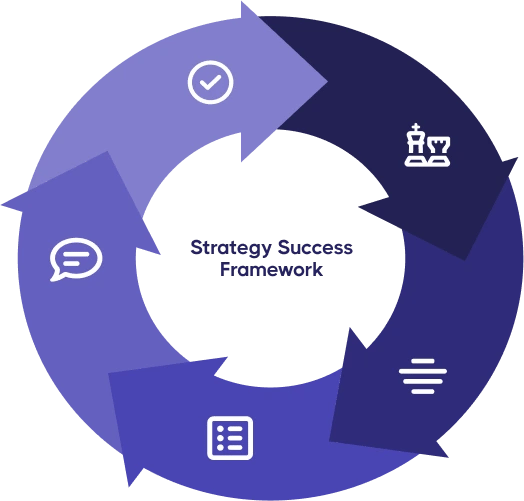
With over 50 years of combined experience helping organizations align operations to overall strategy, ClearPoint’s strategy experts developed the ClearPoint Strategy Success Framework. Below is a breakdown of how ClearPoint supports the second strategy success factor: Aligning Organizations.
Read the breakdown of Factor 1: Organizing Strategy
ClearPoint’s Alignment Tools
Cascading a strategy across an organization ensures that strategic objectives are understood and acted upon at every level. ClearPoint provides the framework and tools to define strategies and give teams visibility.
Alignment Matrices
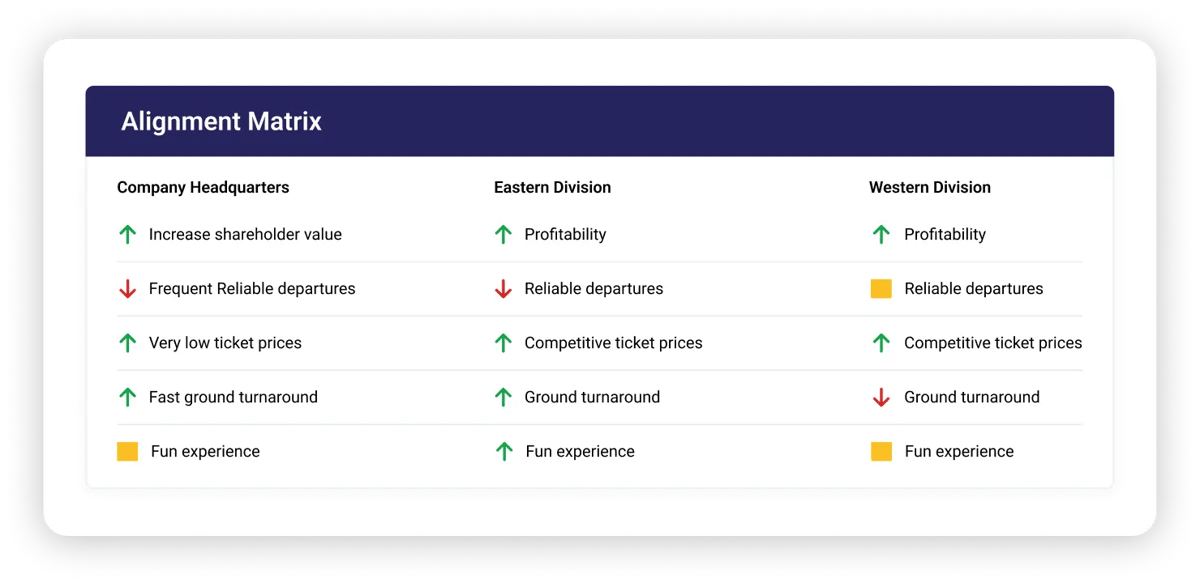
ClearPoint's alignment matrices map out the interconnections between departments and their contributions to strategic objectives. This matrix format allows managers to see how efforts and projects align with the company's broader goals.
Visual Identification of Gaps
Graphical representation of alignment helps stakeholders assess departmental synchronization. The matrices help identify areas lacking alignment, allowing for timely adjustments.
Aggregation of Data and Status
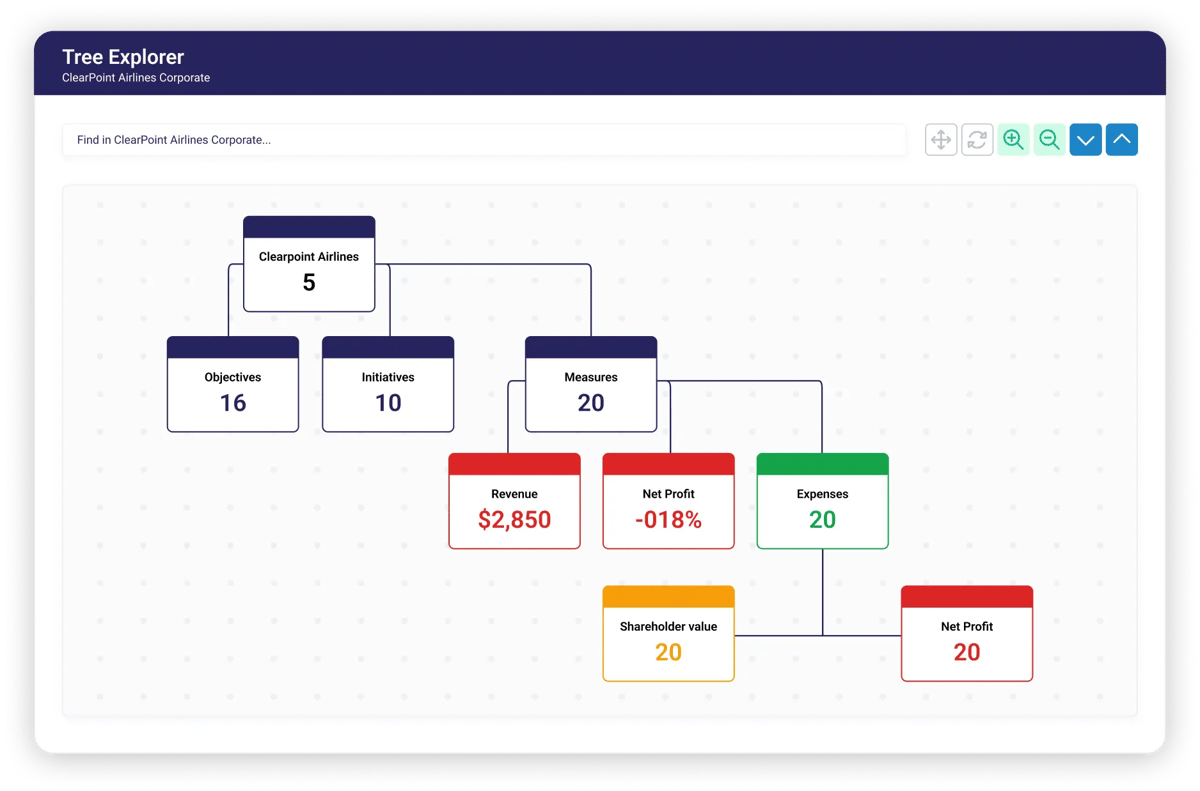
ClearPoint aggregates data across departments and adds status indicators that track progress, giving executives a clear picture of where the organization stands in achieving its goals.
Roll-Up Reports
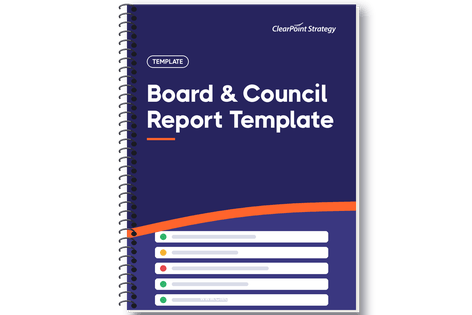
Customizable reports aggregate data from various levels of the organization.
The City of Vaughan, Ontario, uses ClearPoint to create linkages and show alignment between the elements of its strategic plan. On the operational side, each department has a dashboard that shows the relationships between its performance measures and its initiatives. Vaughan added monthly progress reports to supplement its annual presentations to City Council, and it keeps integrating performance measures into department business plans and monthly project reporting.
Status Indicators
Red/Amber/Green (RAG) visual cues highlight performance against targets, aiding in resource allocation.
Agree on what each color means before you roll statuses up. Red signals significant issues that need immediate attention, amber signals potential problems or minor deviations from the plan, and green means everything is proceeding as planned. Some organizations add colors such as blue for completed projects or gray for insufficient information. Our guide to setting RAG statuses for KPIs adds one more point. Team members need to feel comfortable reporting issues early, even if that means a yellow or red status.
AI-Driven Assistance
Using artificial intelligence, ClearPoint Strategy offers an AI Assistant that aids in the strategic planning process.
AI Integration in Strategic Planning
By integrating advanced AI tools, ClearPoint automates strategic planning and helps ensure that strategic plans are implemented across all levels of the account, and therefore executed efficiently across the organization.
Collaboration
Strategic alignment depends on collaboration. ClearPoint ensures all stakeholders have access to real-time information, maintaining consistency across communications.
ClearPoint Communications
Receive automatic updates about changes in strategy. Notifications, alerts, reminders, discussions, @mentions, and other collaboration features allow your team to keep strategy at their fingertips, maintaining engagement and focus on goals. ClearPoint also encourages feedback loops where teams report on progress and challenges.
Shared, trusted data is what keeps leaders in the conversation. At Edenor, data collection had been difficult and cumbersome, and leadership struggled to get accurate and timely data for decisions. With ClearPoint, the team could validate data, so they trusted the numbers in their reports, and reports were generated quickly.
Measurable Improvements in Strategic Execution
ClearPoint helps organizations implement and benefit from strategic alignment. ClearPoint partners have reported achieving:
- Success Metrics: Improvements in efficiency and execution therefore improve revenue growth, customer satisfaction, and employee engagement.
- Improved Decision-Making: Better alignment leads to more informed decisions.
- Increased Agility: Companies become more responsive to market changes and internal shifts.
By using ClearPoint’s advanced planning tools, your organization can set ambitious goals and ensure that strategic plans are executed efficiently across all levels of an organization. Our methodologies help you achieve more through coordinated efforts and informed decision-making. To refine your strategic alignment, schedule a free demonstration with a strategy expert to see how ClearPoint Strategy will guide your organization toward success.
Common questions