The problems Chief Strategy Officers face, and how ClearPoint customers such as Velosio and PG&E used the software to track and report on strategy.
- Keep strategic data in one source of truth so reporting is simpler and every department works from the same numbers.
- Use dashboards and reports to follow initiative progress across the organization and spot problems early.
- Link each initiative to the activities beneath it; Velosio used those links to see which initiatives deserved priority.
- Feed measures from your ERP or accounting system; in 2014 Velosio connected Dynamics ERP for real-time updates.
- Build scorecard pages for period comparisons; PG&E cut reporting time from a month to a fraction of that.
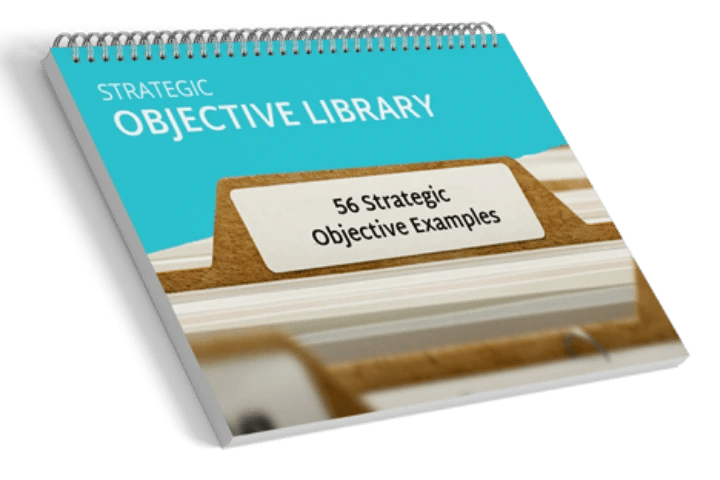
- Draft objectives from the free library of 56 strategic objectives.
Every organization has goals for growth, profit and improvement, but setting goals does not get you there. Strategy executives need a way to manage the data behind the plan and turn it into decisions. According to the Journal of Small Business Management, 71% of fast-growing companies have strategic plans, business plans or similar long-range planning tools. This post covers the problems Chief Strategy Officers (CSOs) run into and how ClearPoint customers use the software to manage strategy.
The strategy management problems CSOs face
CSOs watch the market and competitors for opportunities and risks that could affect the organization. Turning what they find into results means working through a familiar set of problems:
- Aligning many different organizational goals with one coherent plan.
- Managing large amounts of data and keeping it accurate enough to decide on.
- Changing strategy quickly when the market moves.
- Keeping communication working across departments.
- Showing what the strategy has done for the organization.
Origin Bank, a regional bank with branches in Mississippi, Texas and Louisiana, hit several of these at once. It had a plan in place, but as Regina McNeill, Senior Vice President of Market Analytics and Strategic Planning, puts it, “we were not being strategic with our plan.” Consistent accountability and expectations were lacking, and the plan was backward looking. In 2017 the bank scrapped it entirely. The new plan tied metrics directly to strategic outcomes and added forward-looking elements, which matter because financial regulators are eager to see where an institution is headed in the next 2-3 years.
How strategy executives use ClearPoint
Siloed teams and weak collaboration make a coherent strategy hard to plan and carry out. Strategic management software such as ClearPoint helps organizations formulate, implement and evaluate the plan in one place. In most organizations, strategic information is scattered across departments. ClearPoint customers keep it in a single source of truth, so reporting is simpler and everyone works from the same numbers.
Customers use customizable dashboards and reporting features to follow the progress of strategic initiatives across the organization and spot problems early. Executives publish reports to keep stakeholders informed about progress. On-page discussions, workflows, notifications and an integration with Microsoft Teams help team members, departments and stakeholders communicate and work together.
Origin Bank built its review process around reports like these. It held three monthly meetings each quarter. The first used a Strategic Plan Overview report for a high-level review: what was going right, what was going wrong, and where the risks and opportunities were. The second focused on accountability. Each measure had an owner who entered analysis and recommendations into ClearPoint before the Red Arrow Report went out as pre-reading. The third looked at the plan itself and whether it needed changes, and one week later proposed changes went to the board for approval.
Strategy officers also use ClearPoint to win buy-in and cascade the strategy down to teams and individuals. That way each person can see their part in the larger plan. Teams starting from scratch can draft objectives from the free library of 56 strategic objectives.
At Nest Wealth, a wealth management platform in Toronto, strategy used to feel like something leadership did behind closed doors. Adam Bullied, Vice President of Strategy and Operations, had imported much of the strategic plan into ClearPoint by the end of his first week. By the end of the first month, the team had created 25 summary reports for different audiences. Nest Wealth then used ClearPoint for quarterly planning and weekly company calls. Bullied said: “ClearPoint grounds the way we think about where the business is going.”
See how ClearPoint would run your plan — book a demo
Customer examples
The two examples below come from earlier ClearPoint adoptions, in 2014 and 2013. They describe the results each company reported when it moved off spreadsheets.
Velosio: from Excel to a working plan
Velosio, a fast-growing enterprise software VAR, managed strategic planning and execution in spreadsheets. As the company grew, tracking performance in Excel became impossible. In 2014, Velosio adopted ClearPoint to build its strategic plan, manage initiatives and connect to its existing accounting system.
Velosio moved from Excel to ClearPoint within days and went on to hold its most successful strategic planning retreat ever. The integration with Dynamics ERP gave real-time updates and saved the time previously spent collecting data. Linking initiatives to individual activities showed Velosio which initiatives deserved priority, and it helped business units work together on execution.
The Velosio retreat worked differently from the ones before it. Before ClearPoint, leaders worked through one business unit’s plan at a time, and everyone had to sit through it all. CEO Jim Bowman said: “With ClearPoint, we were able to communicate the corporate objectives and the parameters, and then set the business units on their own to work in parallel on their strategic plans.” Velosio also aligned its Balanced Scorecard to each employee’s quarterly work plan, which helped leaders see workloads and decide which initiatives to prioritize.
Pacific Gas & Electric: faster reporting
Pacific Gas & Electric (PG&E), a major utility, had extensive performance reporting requirements and a manual, spreadsheet-based process that was slow and error-prone. In 2013, PG&E chose ClearPoint for its flexibility and reporting.
PG&E built custom scorecard pages for period comparisons and brought its data into one web-based system. Reporting time dropped from a month to a fraction of that, so leaders spent their time on decisions instead of gathering data. Data accuracy and governance improved, and monthly performance meetings ran more smoothly. The PG&E case study has the details.
Common questions