A look at how 10 U.S. cities set sustainability goals, targets and initiatives, and shared their plans with residents, as of Earth Day 2021.
- Pair each sustainability goal with a dated target and specific initiatives. DC pairs a 50% emissions cut by 2032 with named initiatives.
- Publish progress where residents can check it. Austin reported net-zero progress on an annually updated dashboard.
- Bring residents into the planning. Lakewood even has a Sustainability Plan for Kids, developed by middle school students.
- Fold sustainability into the citywide strategic plan. Long Beach planned this to hold itself accountable for meeting its goals.
- Lay out goals, initiatives and measures on a strategy map, as Durham does. Residents can then find and understand the plan easily.
We wrote this roundup for Earth Day 2021 to see how local governments were turning sustainability into plans they could execute. The plans, targets and programs below are described as their cities published them at that time, so check each city's site for its current plan. They are useful less as news than as patterns to copy: no plan for sustainability, or for your wider strategy, works without clear goals and measures. What these cities share is that they publish their plans and progress where residents can find them, and give residents ways to take part.
What sustainability means for a city
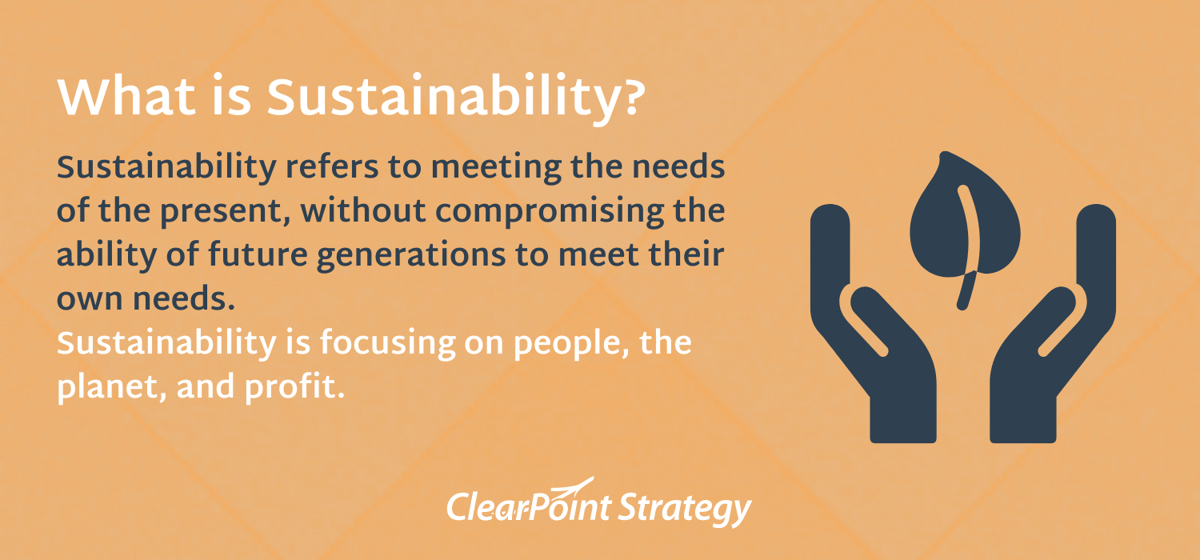
Sustainability means meeting the needs of the present without compromising the ability of future generations to meet their own. It is often broken into people, the planet and profit: social responsibility, environmental stewardship and economic prosperity. It also recognizes that resources are limited and need to be used with their consequences for people and the environment in mind.
Ten city sustainability plans
The cities are in no particular order. Each plan fits the city it serves, so for each one we pulled out the parts worth borrowing: how it shares the plan with residents, the initiatives it runs and the targets it set.
Washington, DC
Washington, DC's Sustainable DC 2.0 plan sets 36 goals across 13 categories, with about 167 initiatives split into short-term, medium-term, long-term and ongoing work. Two of its goals show how the plan pairs each goal with a dated target and specific initiatives.
- Goal: reduce greenhouse gas emissions from all local sources, on track to eliminate them by 2050. Target: cut emissions 50% by 2032. Initiatives: give people and organizations the information and resources to reduce their own emissions, and measure and eliminate methane leaks across the District.
- Goal: increase the District's resilience to climate change through physical adaptation and human preparedness. Target: by 2032, require 100% of new buildings, major infrastructure and neighborhood plans to consider climate risks and identify adaptation solutions. Initiatives: improve emergency and community preparedness for extreme heat, storms and flooding, focusing on the most at-risk populations, and fully implement and regularly update the Climate Ready DC plan.
Austin, TX
In 2014, the City of Austin set a goal of net-zero community-wide greenhouse gas emissions by 2050 and then built a plan to reach it. At the time of writing, it reported progress to residents through an annually updated dashboard and linked residents to actions they could take themselves, such as composting. Its Imagine Austin plan included these transit actions:
- Create a system of high-capacity transit, such as urban rail and bus rapid transit.
- Improve crosstown transit to connect people to where they live, work, shop and use services.
- Expand discounted transit fares for economically disadvantaged residents, people with disabilities and seniors.
Raleigh, NC
Raleigh was the first community in North Carolina to receive certification through the national STAR Community Rating System for sustainability. The City's website explains sustainability for residents and suggests Earth Day activities for all ages, such as becoming a citizen scientist through Zooniverse, removing invasive plants and starting a container garden. Its 133-page Community Climate Action Plan educates residents and sets out how the City intends to reduce greenhouse gas emissions from energy use, transportation and waste, build community resilience to climate change, and support climate equity.
Long Beach, CA
The City of Long Beach kept residents involved through a seasonal newsletter, community meetings open to all and an Earth Day Summit where professionals, students, activists and residents discuss the city's sustainability future. In 2021, its Office of Sustainability planned to use insights from the summit in a five-year Sustainability Strategic Plan. Its 2021 Work Plan listed projects toward the goals of its Sustainable City Action Plan, including two worth copying:
- A Residential Direct Install Program to "provide and install energy saving products and services at no cost for residents in disadvantaged communities."
- A sustainability strategic plan developed with other departments, with sustainability folded into the City's other strategic planning so the City holds itself accountable for its goals.
Denver, CO
Denver has one of the most solar-friendly climates in the country, and the City's website gives homeowners and building owners resources on going solar. Its plan set a target of a 30% cut in greenhouse gas emissions by 2025, supported by three initiatives: a 10% reduction in energy use in single-family homes, 100% renewable electricity for municipal buildings, and electric vehicles making up 15% of Denver vehicle registrations. A progress report showed the City's position against each goal, including a target of 34% citywide recycling and composting, up from 23% in 2018.
Kansas City, MO
Kansas City was updating its Comprehensive Plan at the time of writing, and its playbook site offered short modules for residents at any level of knowledge, plus a public schedule for the update. The City also published a story map of what it had achieved, including:
- Adopting the 2008 Climate Protection Plan.
- Installing rooftop solar panels on 58 City buildings.
- Joining the Renewables Direct program to buy renewable energy for municipal operations.
- Building green infrastructure into stormwater and sewer planning.
- Investing in a free downtown streetcar.
Miami, FL
The City of Miami set a carbon neutrality goal of net-zero citywide greenhouse gas emissions by 2050, then researched what it would take to get there. That research led to an interim commitment: a 60% cut in emissions from 2018 to 2035. One initiative behind it reduces electricity and natural gas use in existing buildings, toward a target of 40% lower energy use in those buildings by 2035, by working with the private sector and obtaining funding to make homes and businesses more efficient and fully electric. At the time of writing, the City was updating its goals and plans and asking for internal and external feedback.
Lakewood, CO
The City of Lakewood has an award-winning sustainability program, built on its Sustainability Plan, a Sustainability Plan for Kids developed by middle school students, and annual reports on progress toward its goals. Initiatives from its reporting at the time included:
- The Bear Creek Watershed Adaptation Plan, for which the Bear Creek Watershed Association ran climate modeling and risk analysis to inform water quality management.
- Directing 1,015 kilowatts of solar energy to power City facilities.
- Zero-waste efforts at the annual Festival Italiano, where local businesses added recycling and composting.
Charlotte, NC
The City of Charlotte focuses on smart growth, which it defines as "an approach to development that encourages a mix of building types and uses, diverse housing and transportation options, development within existing neighborhoods, and community engagement." Its website explains its goals, results and vision with videos. One goal from its Charlotte 2030 Vision Plan is to give residents ways to stay informed and have a voice in the transportation and land-use decisions that affect them. Initiatives listed for that goal were:
- Inform residents of chances to shape the Unified Development Ordinance, Charlotte Future 2040 Comprehensive Plan and Strategic Mobility Plan.
- Partner with neighborhoods so they understand and have a say in proposed developments and street changes.
- Get 600+ people exploring their community by bike during Biketoberfest and on foot during #WALKCLT.
- Host the ninth annual Charlotte Sustainability Awards as an interactive online event for Earth Day.
Durham, NC
The City of Durham published a 62-page sustainability plan with a strategy map, a vision and background on how the plan was developed, which makes it easy for residents to find and understand. Under its goal of thriving, livable neighborhoods, the plan links projects to measures of success:
- Establish a community-led advisory board to recommend goals, measures and strategies for equity.
- Develop a democratic process that gives residents direct decision-making power in local government. Measure: a Resident Engagement Index score of 9 or greater by 2040.
- Prioritize capital funding for the sidewalk construction and repair projects identified in the Bike+Walk Plan.
- Develop a 5-year short-term transit plan that expands bus routes and park-and-ride options. Measures: reduce daily vehicle miles traveled per capita to 30 by 2040, and have 70% of residents live within a ten-minute walk (0.5 mile) by 2040.
Common questions