Everything you’ve ever wondered about the Balanced Scorecard in one complete article
- Pair leading and lagging indicators for each goal. Financial results only report the past; drivers show whether you are on track for future goals.
- Link goals across the financial, customer, process and people perspectives. Skilled people running good processes should satisfy customers and drive financial results.
- Fit the strategy map on one page and share it widely. Organizations print it, post it on intranets and websites, and share it with business partners.
- Secure leadership buy-in before you build the scorecard. It works only if executives replace current management routines with it rather than running it alongside.
- Build your scorecard in five steps with this scorecard guide. Start with a purpose statement and finish by aligning initiatives to the strategy.
Table of Contents
- Chapter 1: What is a Balanced Scorecard?
- Chapter 2: The Origin Of The Balanced Scorecard
- Chapter 3: Scorecard Lingo 101
- Chapter 4: A Simple Breakdown Of The Balanced Scorecard Framework
- Chapter 5: How to Read A Scorecard
- Chapter 6: How is the Balanced Scorecard typically put to use?
- Chapter 7: Options For Managing Your Scorecard
- Chapter 8: How To Manage Your Scorecard in ClearPoint
- Chapter 9: What does the future hold for the Balanced Scorecard?
Chapter 1: What is a Balanced Scorecard?

Let’s begin with the Balanced Scorecard definition and basics:
The Balanced Scorecard (BSC) is a business framework used for tracking and managing an organization’s strategy.
The BSC framework is based on the balance between leading and lagging indicators, which you can think of as the drivers and outcomes of your company goals. When used in the Balanced Scorecard framework, these key indicators tell you whether you’re accomplishing your goals and whether you’re on the right track to accomplish future goals.
With a Balanced Scorecard, you can:
- Describe your strategy.
- Measure your strategy.
- Track the actions you’re taking to improve upon your results.
Chapter 2: The Origin Of The Balanced Scorecard

In 1992, Drs. David P. Norton and Robert S. Kaplan started a working group to examine the challenge of reporting only on financial measures. In for-profit organizations, financial measures provided a lagging report (i.e. they told you what happened last month, quarter, or year), but they were not able to look forward. Norton and Kaplan wanted to see what forward-looking measures that act as leading indicators might look like, and how they could affect an organization’s strategy.
Chapter 3: Scorecard Lingo 101

There are other Balanced Scorecard-related definitions you’ll need to know if you decide to implement it, such as “objective,” “measure,” “initiative (or project),” and “action item.” Here’s a quick cheat sheet.
- You have a high-level goal in mind, which is your objective.
- The measures say, “How will I know that I’m achieving the objective?” (In other words, they allow you to see if you’re meeting your goals.)
- The initiatives are put in place to answer the question, “What actions am I taking to accomplish the objective?” In theory, these are the places you’re spending money or putting forth effort to improve your performance.
- Action items help delegate out small jobs that will allow you to complete your initiatives.
Keep in mind, you may have multiple initiatives focused on improving your measures and achieving your objective. And if your projects are not helping you improve in these areas, you may need to rethink your overall strategy.
Chapter 4: A Simple Breakdown Of The Balanced Scorecard Framework
Throughout the process of creating the BSC, Norton and Kaplan realized an organization must first begin with goals that can break down into four distinct perspectives that are uniquely connected:
- Financial goals: “What financial goals do we have that will impact our organization?”
- Customer goals: “What things are important to our customers, which will in turn impact our financial standing?”
- Process goals: “What do we need to do well internally, in order to meet our customer goals, that will impact our financial standing?”
- People (or learning and growth) goals: “What skills, culture, and capabilities do we need to have in our organization in order to execute on the process that would make our customers happy and ultimately impact our financial standing?”
Over time, the concept of a strategy map was created. A Balanced Scorecard strategy map is a one-page visual depiction of an organization’s scorecard. It shows the connections between all four perspectives.
Chapter 5: How To Read A Scorecard

Take a look at this sample strategy map:
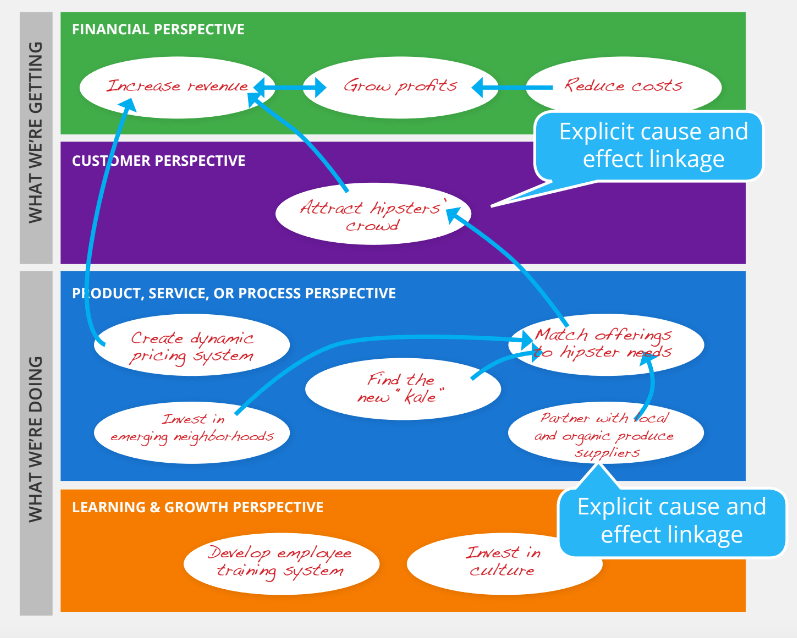
Here’s how you can “read” this map:
This company, a chain of fruit stands called “Kosmo’s,” will invest in culture and build an employee training program in order to partner with local and organic produce suppliers to “find the new kale.” This will help match their offerings to hipsters’ needs and attract the hipster crowd. They’ll also invest in emerging neighborhoods and create a flexible pricing system that will drive revenue. By carefully managing costs, they’ll drive overall profitability.
Sample Measure & Project
As stated previously, the objective is your high-level goal. A measure says, “How will I know that I’m achieving the objective?” And a project says, “What actions am I taking to accomplish the objective?”
One of Kosmo’s objectives in the “Process” perspective is to partner with local and organic produce suppliers. So, a corresponding measure may look at “The number of organic farmers signed up.” And a corresponding project (also called an initiative) may be using the Local Hudson Valley outreach program.
To learn more about measures and projects, check out A Full & Complete Balanced Scorecard Example.
Chapter 6: How is the Balanced Scorecard typically put to use?
A Balanced Scorecard is most often used in three ways:
- To bring an organization’s strategy to life. Those in the company can then use this strategy to make decisions company-wide.
- To communicate the strategy across the organization. This is where the strategy map is critical. Organizations print it and include it in interoffice communications, put it on their intranet, communicate it with business partners, publish it on their website, and more.
- To track strategic performance. That’s typically done through monthly, quarterly, and annual reports.
Who should use the BSC?
The Balanced Scorecard has been proven to be applicable in all industries (for-profit, nonprofit, government, healthcare, and more) and for organizations of all sizes.
Typically it’s used by leadership teams either at the executive level of the organization or at the division or department level. One of the keys to an effective scorecard is having leadership buy-in. That might seem obvious at first glance, but it’s easy to get enthusiastic about the scorecarding concept, see that it is relatively simple to implement, and move forward without the true buy-in and understanding from the leadership team you need.
This can be a struggle because to make the BSC work in your organization, you have to change the way you’re currently managing. You will have to stop the weekly KPI reports or weekly leadership meetings and integrate any strategic management tactics into your scorecard. If your leadership team doesn’t buy into this concept, they won’t feel obliged to change the way they handle their strategy and management.
The Balanced Scorecard makes it easy to communicate your strategy, but having a strategy and discussing it is only one piece of the puzzle. For your scorecard to be effective, you need to execute your strategy, which includes managing it, measuring it, and making decisions around it.
Chapter 7: Options For Managing Your Scorecard

We’ve seen organizations use pen and paper, Excel, PowerPoint, various scorecard-specific applications, and business intelligence tools to manage and track Balanced Scorecards. Aside from pen and paper (which we do not recommend for obvious reasons), there are pros and cons to each:
A Microsoft Office Application (Excel Or PowerPoint)
Positives:
- It can be easily managed by individuals.
- It can be customized to meet the specific needs of your executive team.
- Each element can be done entirely to your specifications.
Considerations:
- It is very difficult to manage from one reporting period to the next.
- It is very hard to keep track of versions, so different executives might be seeing different numbers in their report if they do not have the most up to date version.
See Also: How To Create A Balanced Scorecard In Excel
A Scorecard-Specific Application
Positives:
- It is typically very adept at managing the Balanced Scorecard and can do so out of the box.
- It can handle multiple users.
- It can create the reports you want.
Considerations:
- Sometimes you may have trouble linking to other applications.
- It requires a learning curve.
- It can be expensive.
- Some are not flexible.*
*The caveat here is that scorecard-specific applications are evolving at a rapid pace. Many of them (including ClearPoint!) can be customized as much as, or more than, your PowerPoint or Excel scorecard. We may be biased, but we believe the best option for managing your scorecard is ClearPoint, so we’ll walk through what your process would look like in the next chapter.
See Also: The 6-Part Scorecard Software Checklist
A Business Intelligence (BI) Solution
Positives:
- It’s typically connected to your data warehouses or your information analytics systems.
- You can store a lot of your data and information in one place.
Considerations:
- It is very hard for your typical business user to use, and you’ll likely need an IT team to be involved with the integration.
- It is very hard to generate your executive-team reports.
- It is hard to include qualitative information with your project information.
- It can be cost-prohibitive.
Chapter 8: How To Manage Your Scorecard In ClearPoint
The advantages of a Balanced Scorecard are many, but you’ll only experience them if it’s properly managed. The data collection and reporting associated with the Balanced Scorecard can be challenging and time consuming. ClearPoint was built to save teams time and effort on scorecard management. The system can also be customized to handle any scorecard approach.
To understand how scorecard management works in ClearPoint, take a look through the images below. They illustrate how easy it is to get started, as well as how simple it is to manage the reporting process going forward.
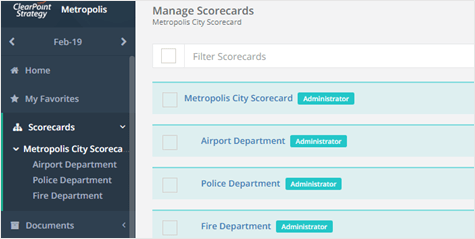
To get started, you simply add and name a scorecard. The scorecard’s name should either be the organization itself (if it’s for the entire company) or the specific entity it applies to. As you grow your scorecard process, you’ll likely end up with a hierarchy of scorecards.
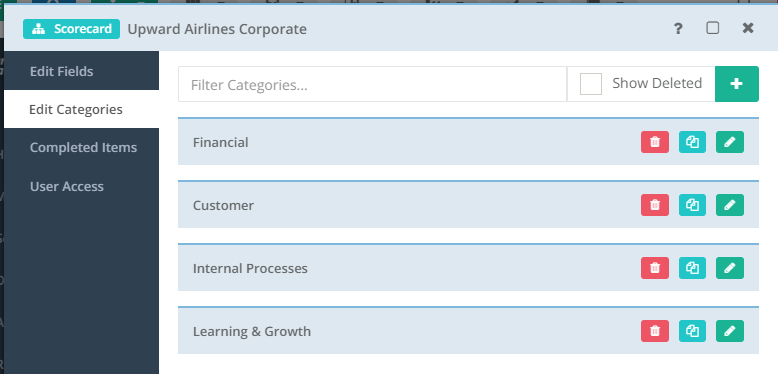
Add the Balanced Scorecard perspectives or categories.
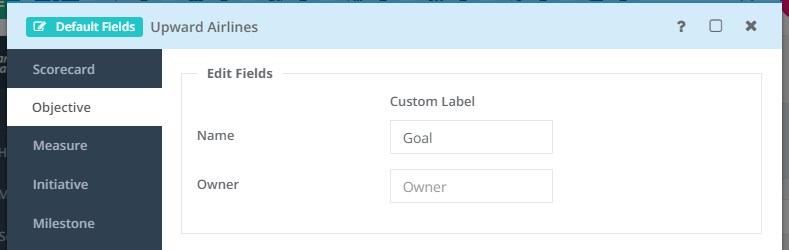
Not everyone uses traditional scorecard terminology; some may refer to “objectives” as “goals,” while others call “measures” “KPIs.” You can easily customize element names in ClearPoint without involving the IT team.
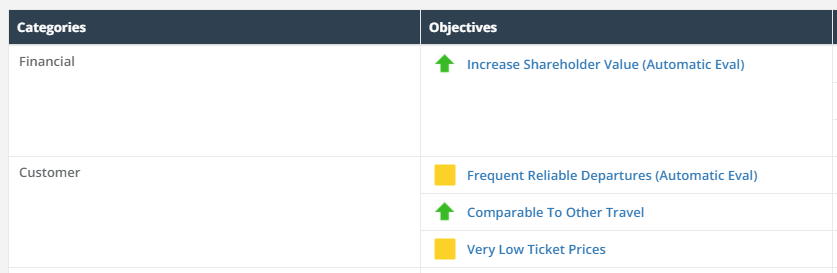
Add your goals and link them to the associated categories. In less than five minutes, you’ve customized the system, and you’re almost done setting up the scorecard.
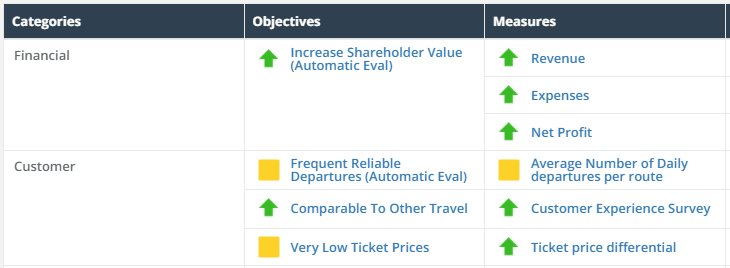
Add your measures to finalize the setup of the entire framework.
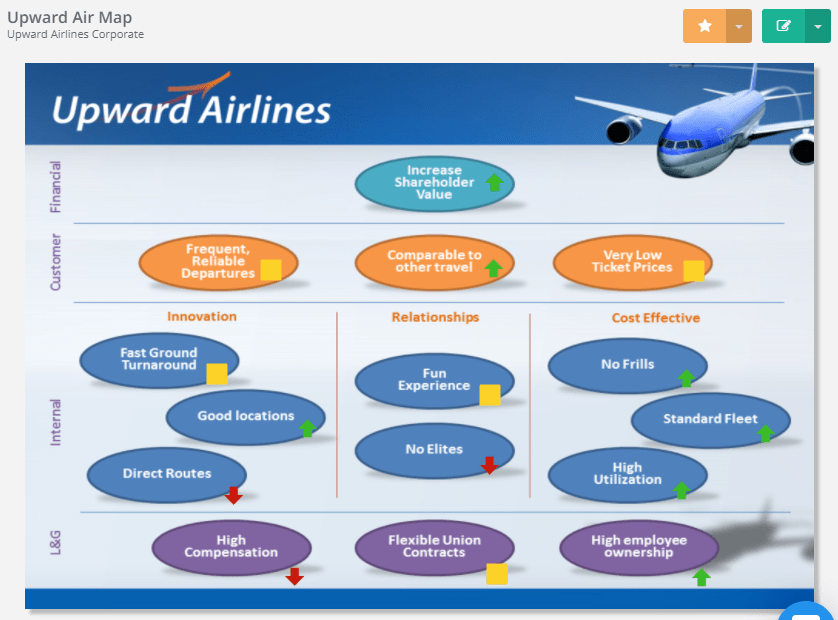
Upload your strategy map (the one you likely created in PowerPoint) into ClearPoint. You can add status icons to different goals that you can use to drill down for more details. They’ll always reflect the current status of each goal (red/yellow/green).
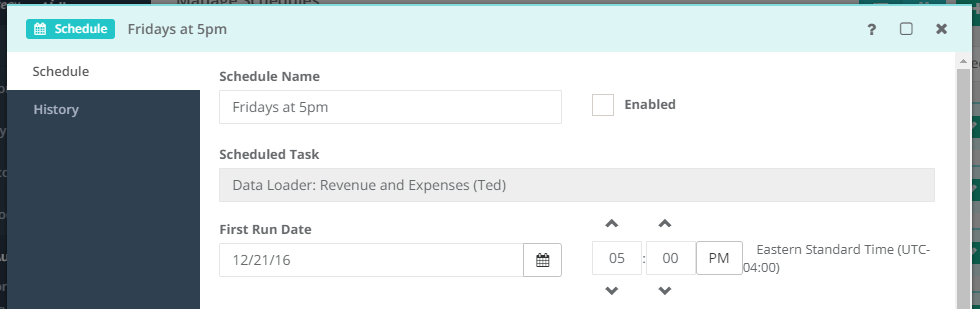
Loop in your organization’s data specialists and give them access to ClearPoint. At the outset, they’ll bring their data into ClearPoint from Excel. Going forward, they can take advantage of the Data Loader to automate periodic data uploads.
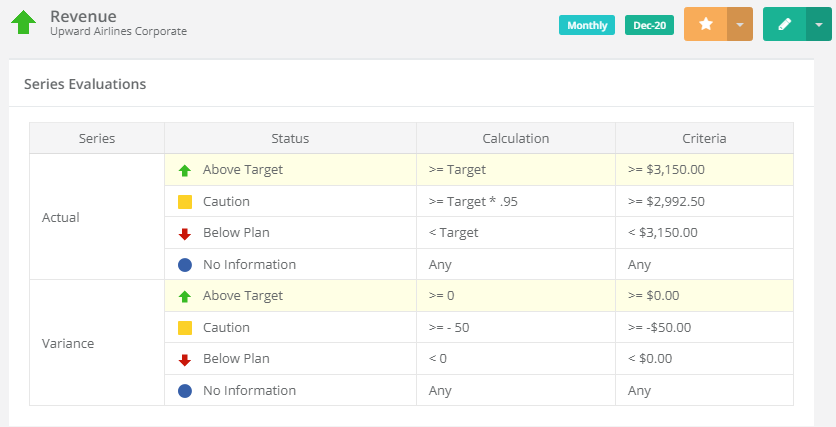
ClearPoint uses red, yellow, and green status indicators to help you quickly and expertly evaluate whether your goals are being met. It takes just a few minutes to set up these automatic evaluations comparing actual results to target results, with no more human error.
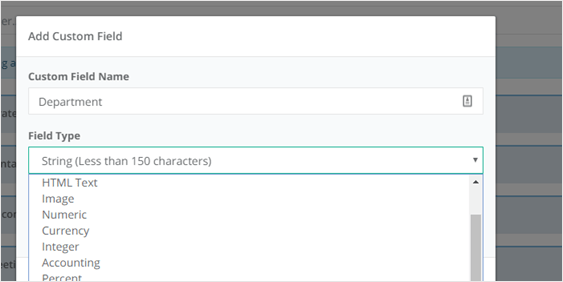
Your Balanced Scorecard-based approach may require some additional reporting fields. There’s no need to contact IT or the ClearPoint Support Team for this additional configuration; you can easily create the new fields yourself.
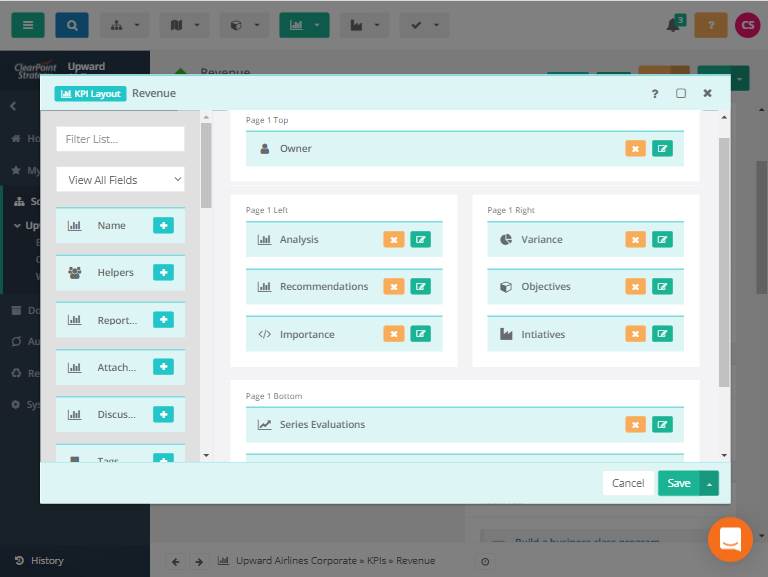
Customize the layout of each page, depending on what you and your end-users most need to see.
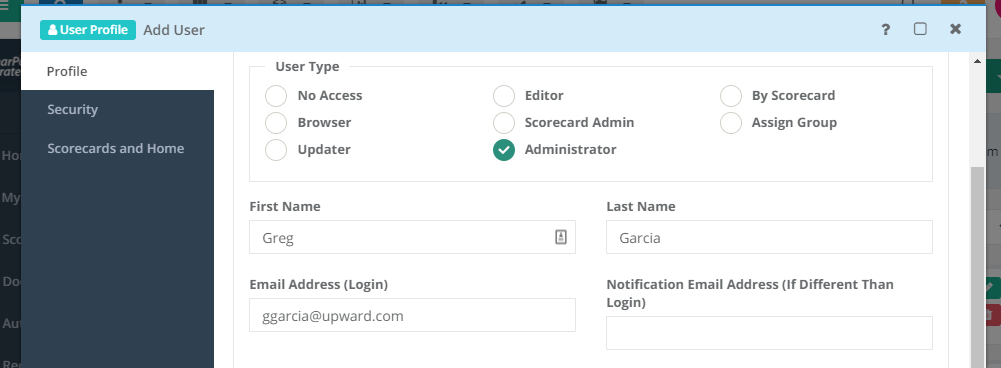
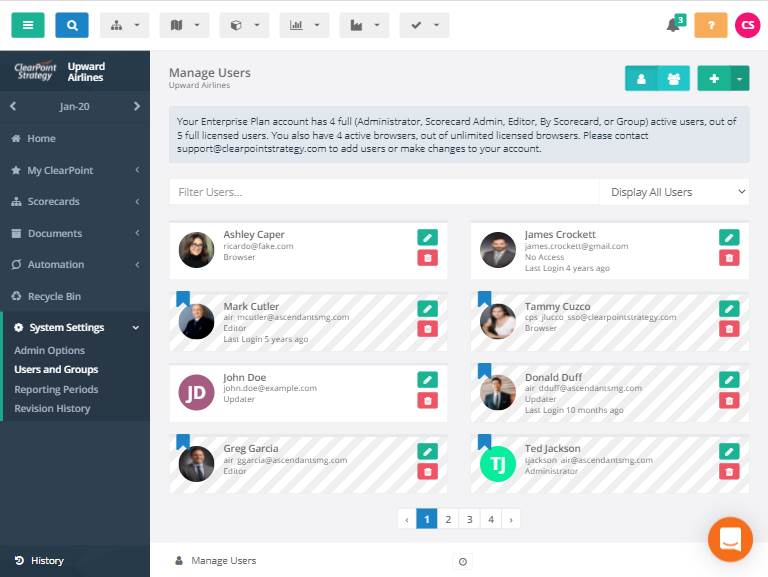
With your first scorecard built, you can now add more users to help create scorecards for each department. Everyone can log in online and there is no need for IT support.
Departments can add their specific goals and KPIs in their own scorecards. Anything that’s important at the top level of the organization can be rolled up via linking or through simple calculations. Thanks to ClearPoint’s ability to create linkages and pull data from anywhere, hierarchical relationships are clearly demonstrated.
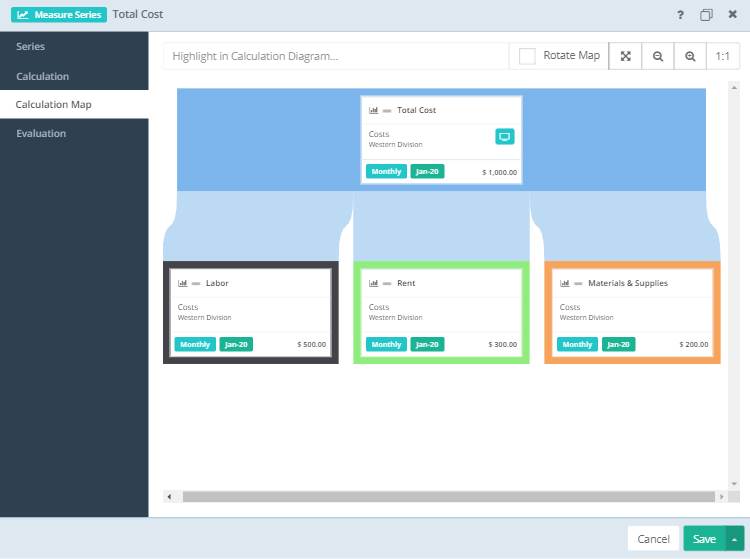
You’ll now have people from around the organization using ClearPoint and contributing to strategy reporting.
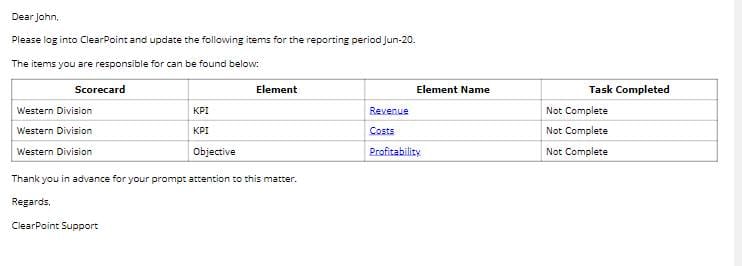
Schedule emails within ClearPoint to automatically go out to people who have not made timely updates. ClearPoint even sends users a list of what they need to update. They can click through each element to be taken right to the field that needs fresh data. It’s a built-in checklist.
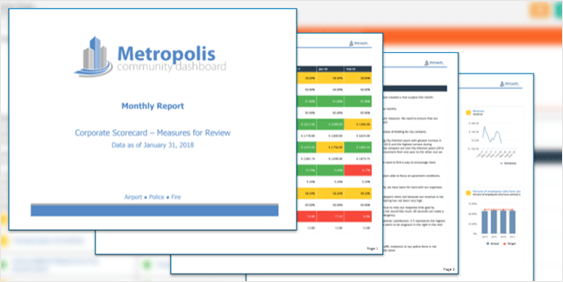
Easily create a Briefing Book template that includes everything you need to report for monthly strategy meetings.
ClearPoint automatically produces a PDF document you can send to meeting participants as a pre-read. All the links in the PDF are live, so readers can click through the document.
That’s how you manage your Balanced Scorecard with ClearPoint. All your data lives in one place, and much of the process is automated. That means you can focus on strategy, not on the manual work of chasing data and structuring reports.
Chapter 9: What does the future hold for the Balanced Scorecard?

Over the last 30 years, the Balanced Scorecard has gone from a “nice to have” to a “must have,” and is now essentially the chart of accounts for strategy. While not everyone uses the exact name, all major management systems currently in play are based on the Balanced Scorecard approach: they integrate objectives, measures, and projects. The majority of organizations are linking goals together in a single system (not always using four perspectives, necessarily), measuring performance, and linking performance to activities and their budget.
Now that some variation of a Balanced Scorecard is the standard, everyone is trying to optimize around that standard. The scorecard only works if you implement and manage it correctly. As a result, organizations in every industry need to figure out the best ways to:
- Integrate the scorecard with the executive management team. The BSC cannot be a separate activity; it must be integrated with the activities of the executive team. That’s easier said than done. Every strategy meeting discussion should relate directly to the framework, and your executive team needs to be consistently focused on your stated objectives or their associated measures. If not, your framework is off, or someone may be cherry-picking measures in an effort to change the strategy, which will derail your efforts.
- Integrate data for better visibility. Strategic data will always live in multiple places: sales and customer data lives in a CRM, financial data in a financial management system, and process data perhaps in an ERP. Leadership teams won’t (and shouldn’t have to) log into four different systems; nor is such a splintered view of data helpful. Getting all your strategy-related data into one place improves visibility and decision-making.
- Make sure all departments are working in tandem. In the past, it was common for different departments to have different strategies. Now, we're seeing more companies develop a single strategy map for the organization, with departments linking to it and even individuals setting goals based on it (using the OKR framework). Everyone should be working toward a common set of objectives, as outlined in the Balanced Scorecard. It’s a simple concept, but one that’s not always implemented successfully.
Reduce the time it takes to manage the scorecard. Managing your performance within the scope of this framework takes time. It requires chasing down data from multiple sources, updating databases, creating reports, and more. Organizations are increasingly looking for ways to automate the process and, at the same time, keep the team working as a well-oiled machine. Less time spent on process-related tasks means more time for strategy discussions and the key decisions that will impact the future of your organization.
Common questions
Can a government or nonprofit change the four Balanced Scorecard perspectives?
Yes. Keep the cause-and-effect logic, but rename and reorder the perspectives to fit your mission. A city might put residents at the top, treat finance as stewardship that supports them, and call learning and growth workforce or capacity. The test is whether people, processes and resources visibly lead to outcomes for the people you serve.
Why do Balanced Scorecards stall after launch?
Usually because leadership treats the scorecard as a side project. If executive meetings still run on the old weekly reports, discussion drifts away from the stated objectives and people cherry-pick measures. Make the scorecard the agenda of the regular strategy meeting, retire the duplicate reports, and give every measure an owner who updates it on schedule.
How often should a Balanced Scorecard be reviewed?
Update measures as often as their data arrives, typically monthly or quarterly, and review the scorecard in a standing leadership meeting on the same rhythm. Use those reviews to act on red and yellow items. Once a year, test whether the objectives and strategy map still describe the strategy you are actually pursuing.
When does a Balanced Scorecard outgrow Excel?
When more than a few people update it or it has to roll up across departments. A spreadsheet works for one owner, but it is hard to carry from one reporting period to the next, and versions multiply until executives read different numbers. That is the point to evaluate scorecard-specific software.