Why AI Won't Fix Your Strategy Execution (And What Actually Does)
AI made strategy formulation nearly free. The rare advantage is execution — and on ClearPoint's platform, initiatives with a named owner are completed 2.5x as often.

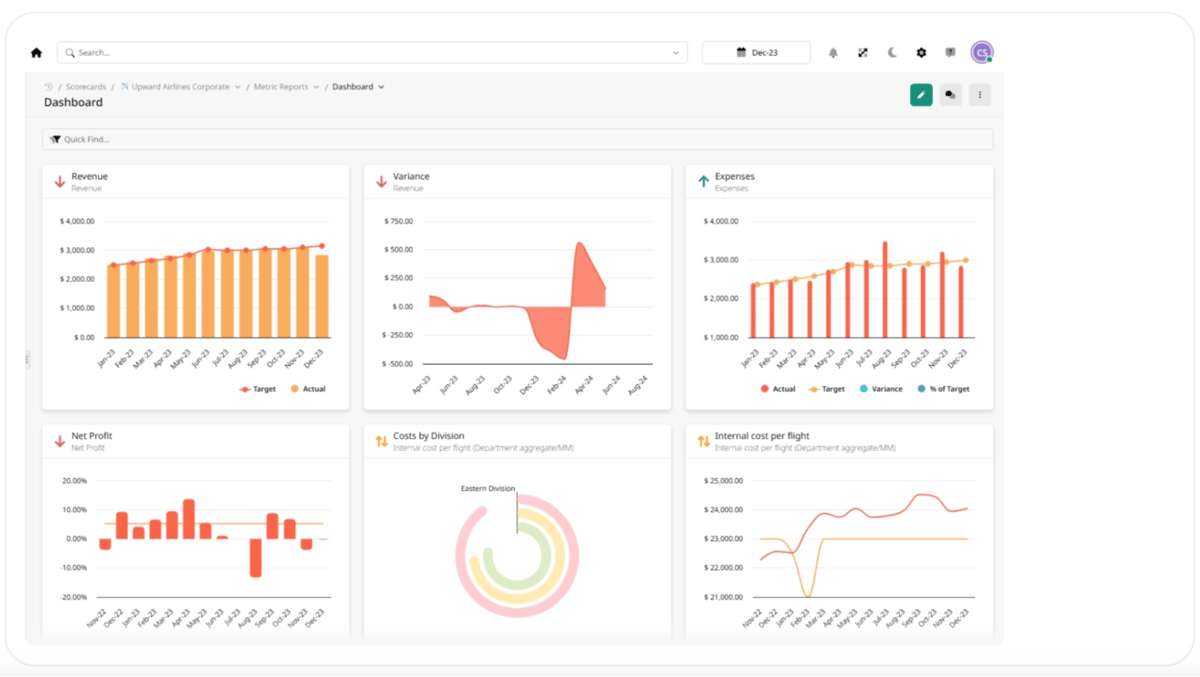
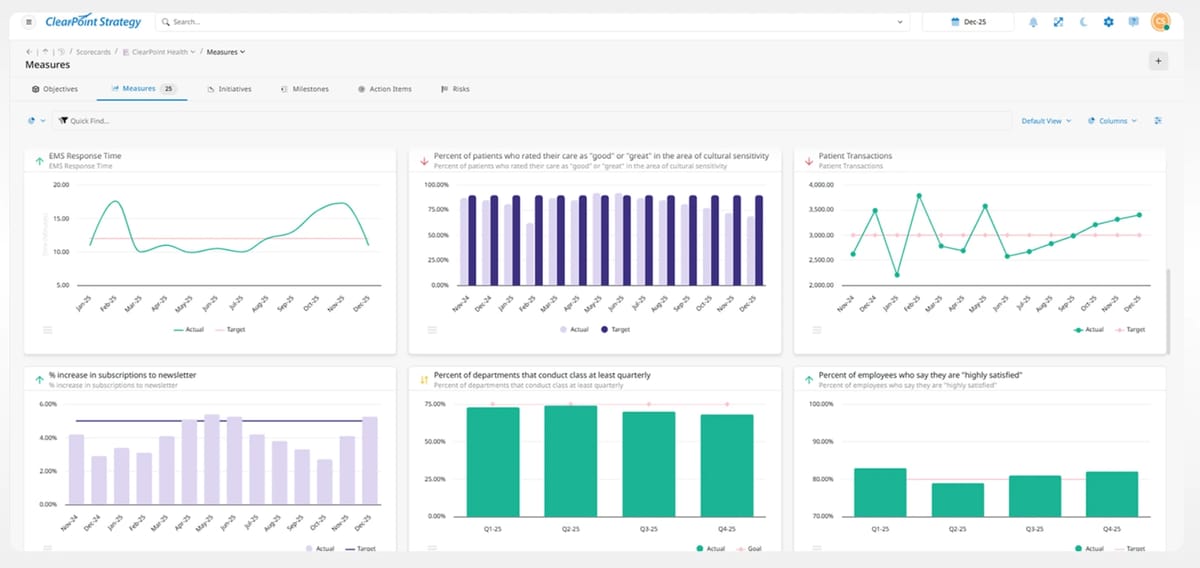
AI can now draft a competent-looking strategic plan in minutes, so the hard part has moved to running it: owners, updates and governance. ClearPoint shows which owners haven't updated yet, so teams can follow up before the review.
The 10 best strategy execution platforms of 2026 in one table, sorted by buyer type, with three demo tests drawn from 4,184 real strategic plans.


Learn how ClearPoint helped Carilion Clinic refine and perfect their healthcare performance improvement opportunities.
Read the story
As AACN grew, the elaborate spreadsheets that housed the information of over 25 different departments quickly became obsolete. They needed a new way to track and share their strategy.
Read the storyAI can now draft a competent-looking strategic plan in minutes, so the hard part has moved to running it: owners, updates and governance. ClearPoint shows which owners haven't updated yet, so teams can follow up before the review.
Texas TRAIGA is the most directly relevant: effective January 1, 2026, it requires agencies to disclose when residents interact with AI and bans government social scoring and biometric identification without consent. California SB 53 targets frontier-model developers rather than municipalities, and Colorado's SB 24-205 never took effect before it was repealed and reenacted as SB 26-189, whose developer documentation requirements begin January 1, 2027. Treat every deadline as provisional, because a December 2025 federal executive order created a task force to challenge state AI laws in court.
An AI initiative inventory is a comprehensive catalog of every AI tool, model, and system used across an organization — including who owns it, what data it accesses, and what decisions it influences.
With a system of record in place, minutes, not days: if every AI initiative already carries an owner, a status, a risk tier and live KPIs, the report is one export rather than a from-scratch build. If it still takes days, you have a system problem, not a reporting problem.
The NIST AI Risk Management Framework (AI RMF 1.0, document NIST AI 100-1) is a voluntary framework from the U.S. National Institute of Standards and Technology, released January 26, 2023. It gives organizations a structured, repeatable way to identify, assess, and manage the risks of AI systems across their full lifecycle, from design and development to deployment and retirement. Version 1.0 is still the current edition; there is no 2.0 as of 2026.
Shadow AI is any AI tool or feature used for the organization's work without IT or governance approval, the AI-era version of shadow IT. According to IDC (2025), 56% of employees use unauthorized AI tools while only 23% use AI their organization governs.
NYPA runs AI governance inside ClearPoint Strategy, the system of record it already used, instead of standing up a separate program. Each AI initiative gets a named owner, a status, a risk tier, measurable outcomes and a review cadence, like any other strategic initiative.
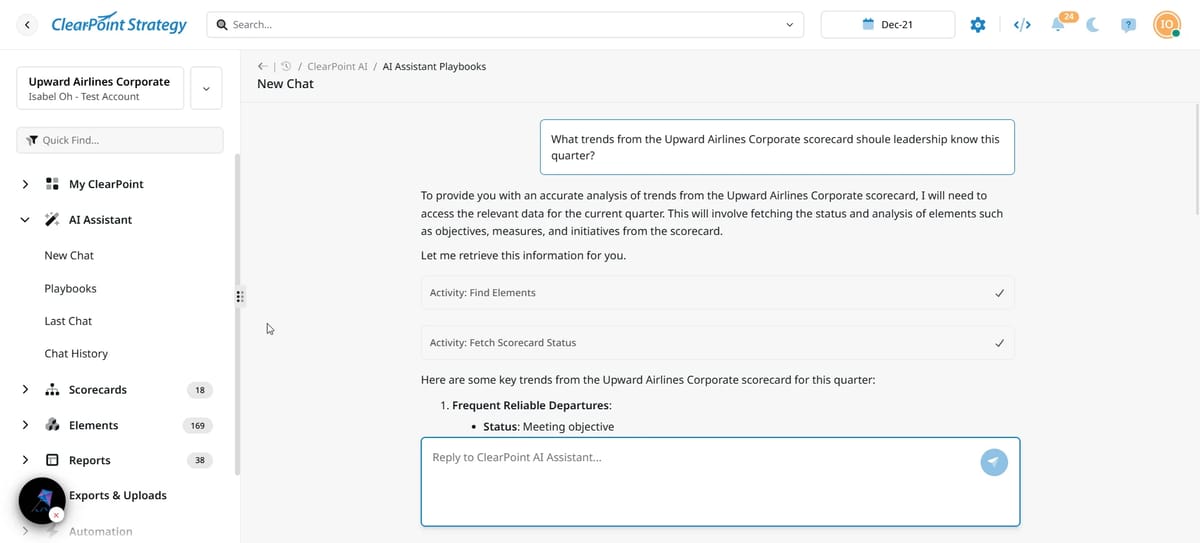
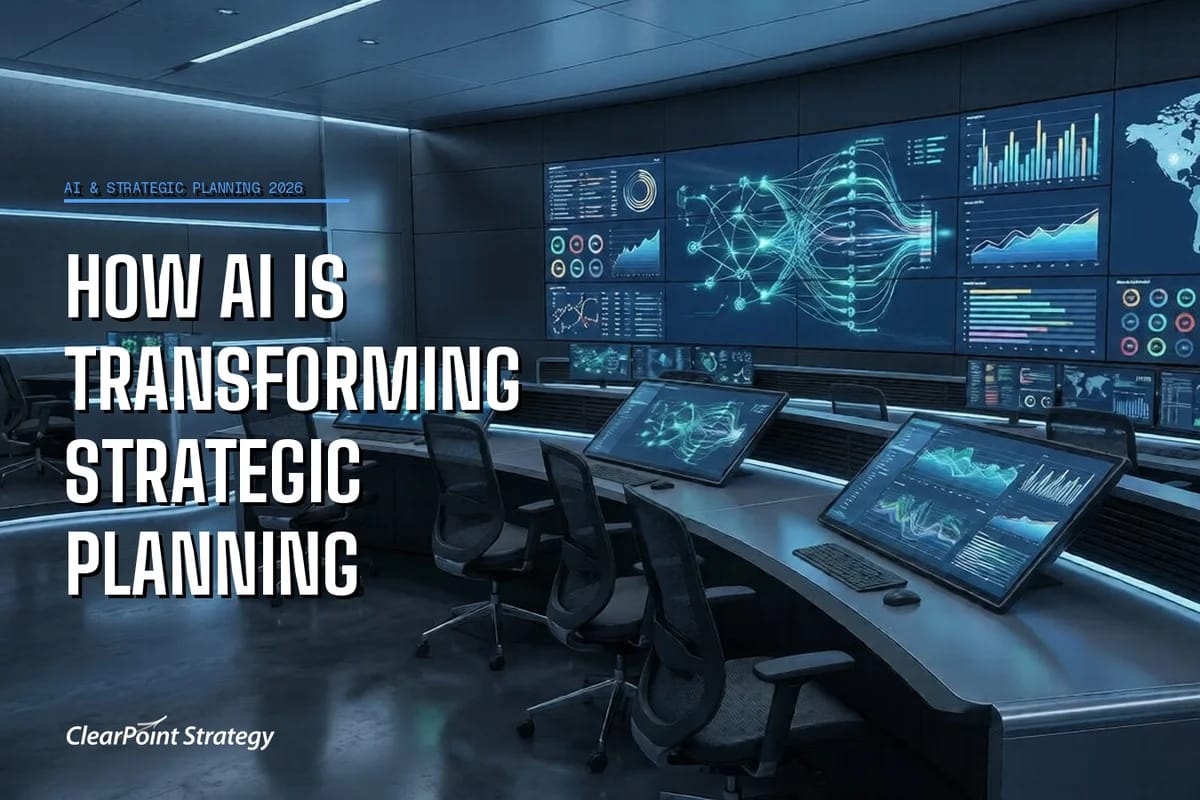
Drafting, analysis and scenario modeling. AI can produce a competent-looking plan in minutes, but generic AI gets you a faster first draft, not a plan that runs. The useful AI is the kind that helps execution: updating measures, flagging what's off track and preparing board reports.